Retirement marks a new stage in life that deserves to be lived in an environment combining comfort, accessible housing, and quality of life. In the provinces of Alicante and Murcia, the design of homes for retirees has evolved significantly, integrating innovative architectural solutions with Mediterranean construction wisdom. This article explores the essential elements that define the perfect home for this life stage, based on real projects, demographic data, and the region’s best architectural practices.
The residential landscape for retirees in Alicante and Murcia
The Spanish Mediterranean coast has consolidated its position as one of the preferred retirement destinations, both for Spaniards and Europeans. This preference responds to climatic, healthcare, and quality of life factors that make Alicante and Murcia privileged locations for this vital stage.
An international destination for retirement
Alicante leads the national ranking as the preferred destination for foreign retirees, accounting for 28.3% of registered European retired residents in Spain. This figure quadruples the national average of 2%, positioning the province well ahead of its closest competitor, Málaga, which concentrates 16%.
In Alicante province, 8.2% of the population over 65 years old was born abroad, mainly from countries such as the United Kingdom, Germany, France, and Scandinavian countries. Murcia, whilst with more modest figures, also experiences constant growth in attracting European retirees, especially in coastal areas such as Mazarrón and Águilas.
Municipalities such as Rojales present 68% of residents born outside Spain, followed by Daya Vieja and San Fulgencio with 63%. In Marina Alta, localities such as Llíber reach 65% foreign population, whilst El Poble Nou de Benitatxell registers 59%.
Emblematic projects in the region
Growing demand has driven the development of residential projects specifically designed for the elderly. Among the most prominent are:
The Comm in L’Alfàs del Pi
Represents the largest residential complex for over-65s in Spain. With an investment of €66 million by Grupo Goya, the project contemplates 262 high-end flats distributed in phases. The first phase, with approximately 80 dwellings, was completed in 2024.
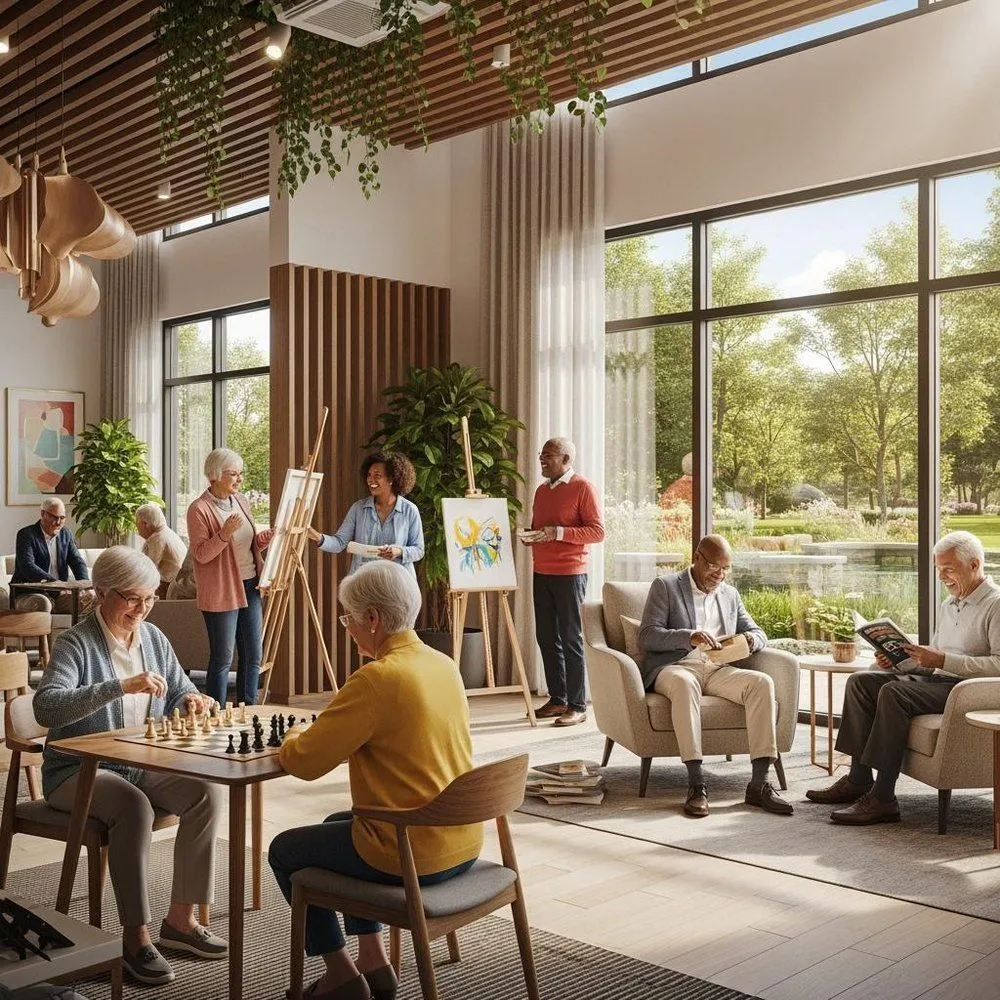
The complex forms part of the Forum project, which exceeds 128,000 square metres and integrates housing, gardens, leisure, sports, and commercial areas specifically adapted to senior residents’ lifestyle.
Santara Senior Living Resort in Santa Pola
This 200-unit residential complex covering 30,000 square metres was acquired by Bestinver, Acciona’s investment management firm, through its Socimi Smart Living Properties. The project represents a senior living model combining residential independence with integrated community services.
Municipal Intergenerational Housing Project in Alicante
Initiated in 2003 by Alicante’s Municipal Housing Board, this project provides 244 accessible dwellings specifically designed for elderly people and low-income youth. The project not only offers dignified housing but creates a welcoming, family-like atmosphere with a sense of belonging.
The properties include Day Centres and have received complementary financing of €995,000 from the Valencian Government. The model has demonstrated economic viability, with rental income generating an annual surplus of €30,499.
Alicante ConVivencia in Castalla
This innovative cooperative project combines local production, services, and accommodation under a transfer of use model for elderly people. Located on a nearly eight-hectare estate in Castalla, less than half an hour from Alicante, the project integrates organic agriculture, beekeeping, and small artisan workshops.
The cohousing model allows elderly people to design their own life project whilst participating in community decisions, maintaining personal autonomy with necessary assistance.
Essential elements of residential design for retirement
The perfect retirement home must integrate multiple considerations beyond mere aesthetics. Specialised architects in Alicante and Murcia have developed a holistic approach combining universal accessibility, energy efficiency, proximity to services, and bioclimatic design.
Universal accessibility and barrier-free design
The Spanish regulatory framework regarding accessibility is well-defined. The Technical Building Code (CTE), through its Basic Document SUA (Safety of Use and Accessibility), establishes the basic requirements that buildings must meet.
Applicable regulations
The regulatory framework governing accessibility includes:
- Technical Building Code (CTE): Establishes basic accessibility requirements since 2006
- Law 51/2003: On equal opportunities, non-discrimination, and universal accessibility
- Law 8/2013: On building rehabilitation for people over 70 and disabled persons
- Royal Decree 173/2010: Incorporates accessibility conditions into the CTE
Specific requirements for dwellings
Dwellings designed for retirement must contemplate:
- Ramps with maximum 10% gradient and non-slip surfaces
- Lifts dimensioned for wheelchairs (minimum 1.10m x 1.40m)
- Doors with minimum 80cm width for free passage
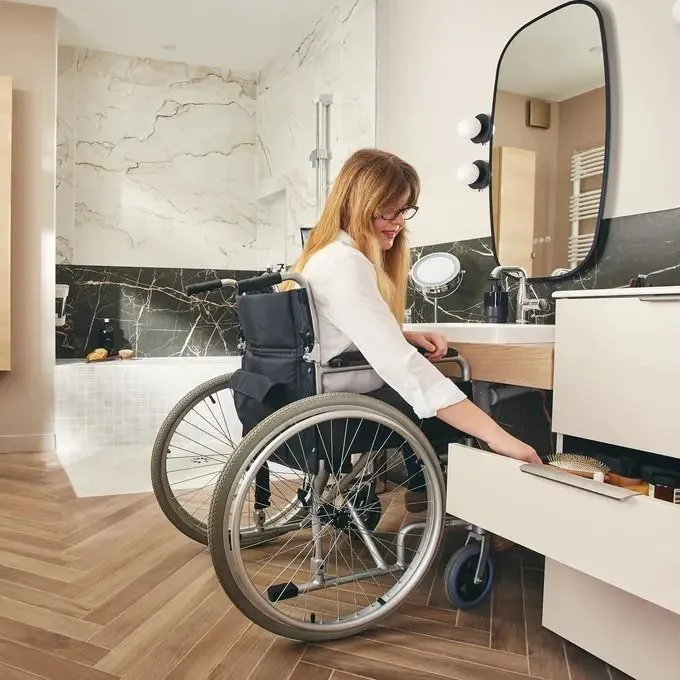
- Turning spaces with minimum 1.50m diameter
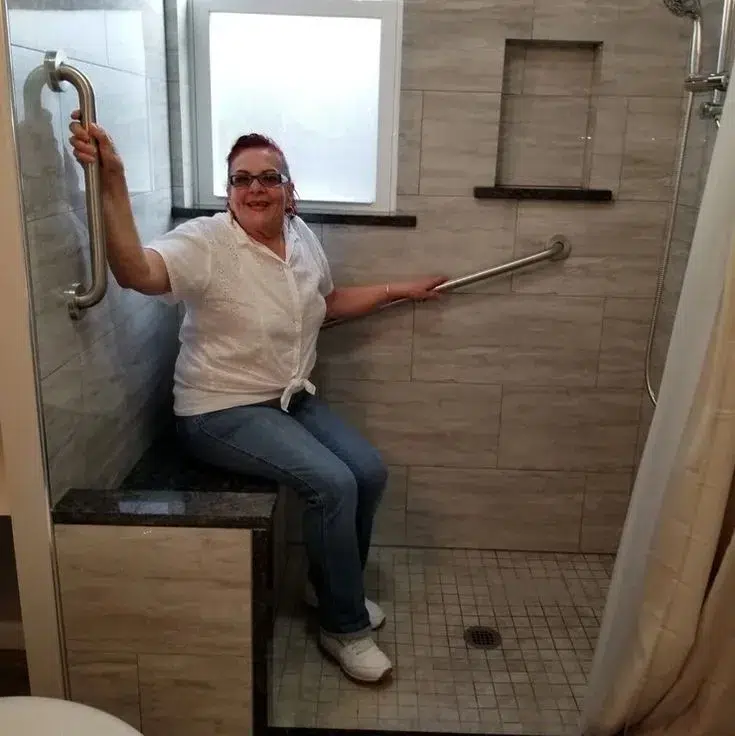
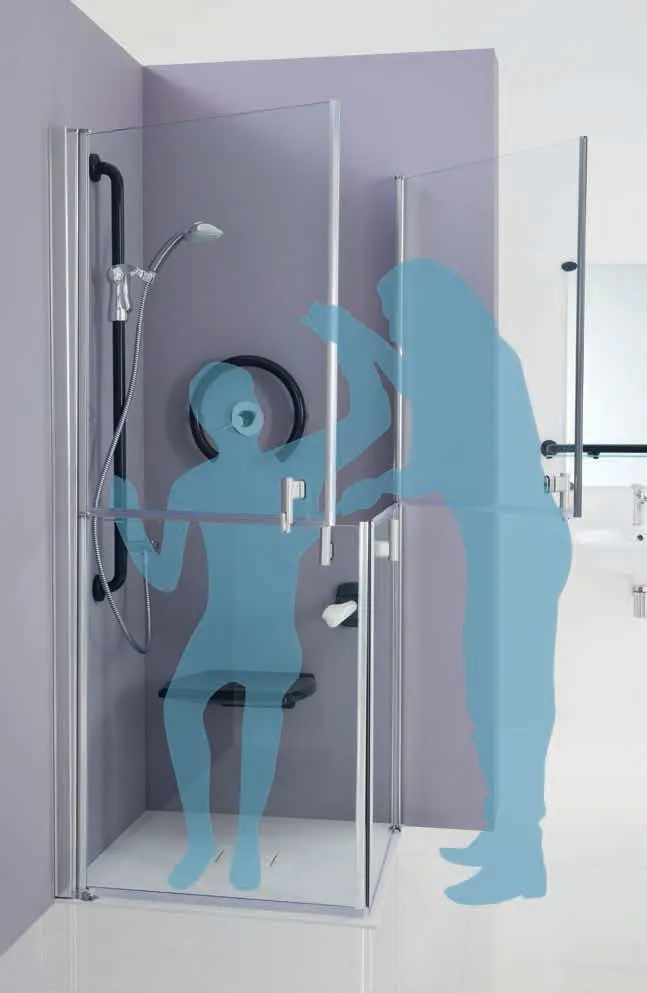
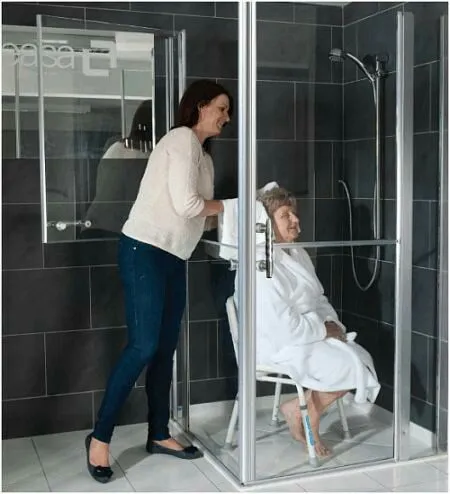
- Adapted bathrooms with support bars and transfer spaces
- Switches and mechanisms located between 0.85m and 1.10m height
- Non-slip flooring without level changes
“Accessibility is not a luxury, it’s a fundamental right. We design spaces where elderly people can maintain their autonomy and dignity throughout their lives”, comments an architect specialised in accessible housing in Murcia.
Energy efficiency and Mediterranean bioclimatic design
The Mediterranean climate of Alicante and Murcia, characterised by more than 2,800 hours of sunshine annually, hot summers, and mild winters, offers exceptional opportunities to apply bioclimatic principles that drastically reduce energy consumption.
Principles of regional bioclimatic design
Regional architects apply specific strategies adapted to local climate:
- Solar orientation: Main rooms facing south to maximise solar capture in winter, with adjustable sun protection
- Cross ventilation: Design favouring natural airflow, reducing artificial climate control needs
- Thermal inertia: Use of materials such as stone, concrete, and ceramics that stabilise interior temperature
- Thermal insulation: Façades and roofs with high insulation levels (U-values below 0.35 W/m²K)
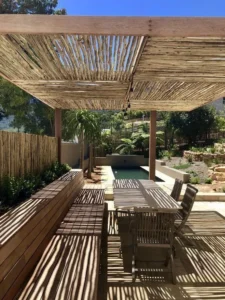
- Sun protection: Pergolas, adjustable louvres, and overhangs calculated according to solar path
- Interior courtyards: With vegetation and water features for natural adiabatic cooling
- Local materials: Mediterranean stone, treated wood, and ceramics minimising carbon footprint
Quantifiable benefits
Rigorous application of bioclimatic principles in Alicante and Murcia’s climate generates measurable results:
- Energy consumption reduction of 60-80% compared to conventional construction
- Annual savings exceeding €1,500 in climate control for average-sized dwelling
- Carbon footprint reduction of up to 70%
- Property revaluation of 15-25% compared to standard construction
- Stable interior temperature with oscillations reduced by up to 8°C
- Payback period for additional bioclimatic design investment under 8 years
Studies conducted at the University of Alicante on bioclimatic design with retractable glazing demonstrate that adaptation to dry Mediterranean climate can further optimise these results, especially in intermediate seasons.
Proximity to medical and social services
Proximity to quality healthcare infrastructure constitutes a determining factor in choosing retirement residence. Alicante and Murcia offer a robust healthcare network combining high-level public and private care.
Healthcare infrastructure in Alicante
Alicante province has a complete healthcare network:
- Alicante General Hospital: Reference centre with all specialities
- Vithas Alicante Hospital: 94 beds, 9 operating theatres, 24-hour A&E, and specialised ICU
- Quirónsalud Alicante Hospital: Da Vinci robotic surgery and advanced ophthalmology unit
- Vistahermosa Clinic: Reference in assisted reproduction, cardiology, and neurology
- Casaverde Hospital: Specialised in functional rehabilitation and geriatric care
- IMED Group: Six hospitals strategically distributed throughout the province
- Health Centre Network: Comprehensive coverage in all municipalities
Specialised services for the elderly
Beyond conventional hospital care, the region offers services specifically designed for senior population:
- Casaverde Alicante Hospital: Sub-acute and reintegration units with therapeutic pool and advanced rehabilitation equipment
- Home healthcare: Nursing, physiotherapy, podiatry, and psychology services at home
- Hospital accompaniment: Professionals specialised in elderly care during admissions
- Telemedicine: 24-hour remote consultation systems
Coverage by national and international insurance companies facilitates access to these services for foreign residents, with Vithas Alicante Hospital and IMED centres particularly recognised for their experience with international populations.
Multigenerational design and flexible spaces
Retirement housing must anticipate changes in needs and allow for future adaptations. Contemporary architects in the region design spaces facilitating both independence and occasional cohabitation with family members.
Adaptable spatial configurations
- En-suite bedrooms on ground floor to avoid stairs
- Spaces prepared for installing domestic lifts without major works
- Independent areas for extended visits from children and grandchildren
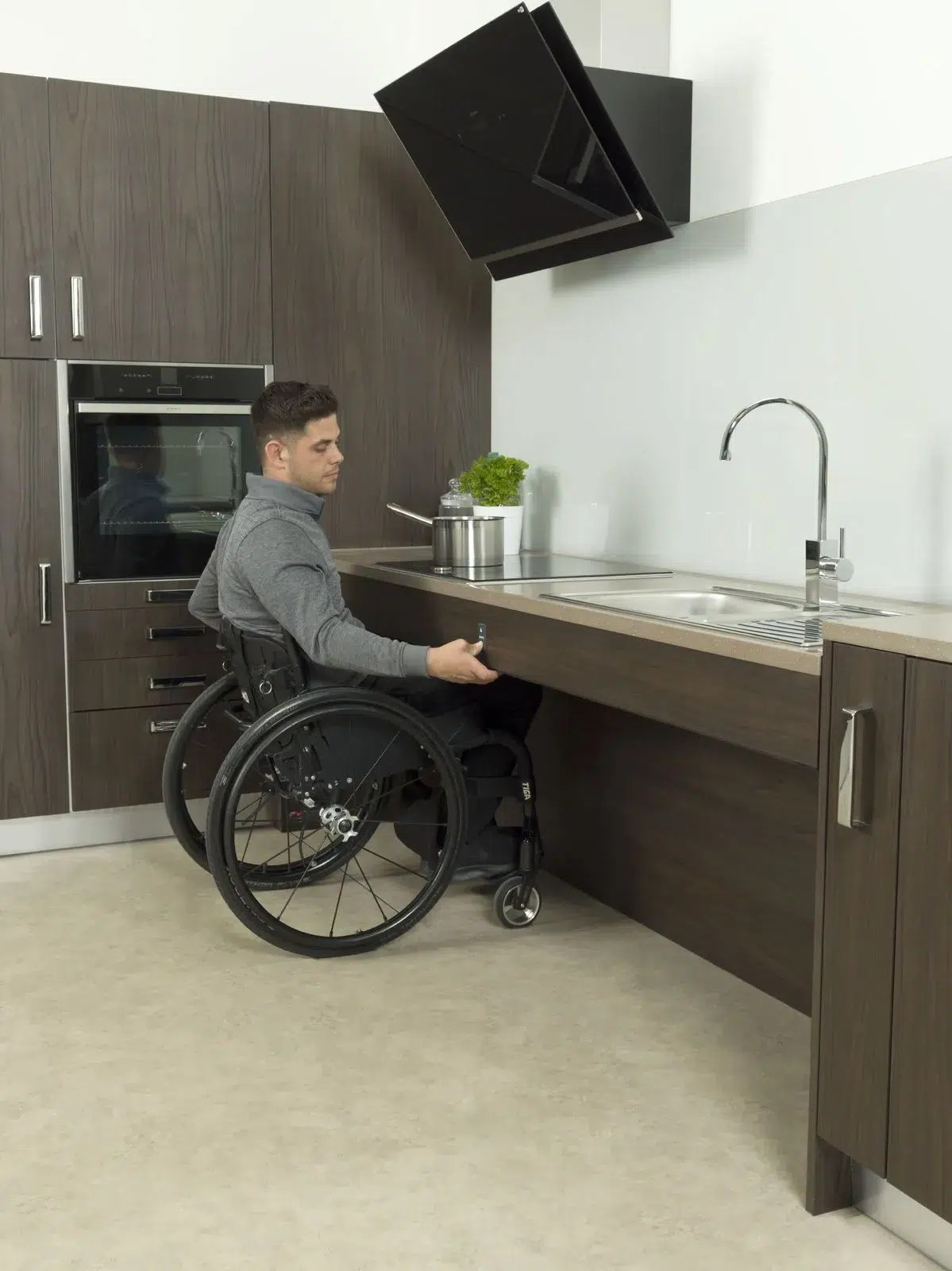
- Kitchens designed with adjustable heights and accessible storage
- Installations prepared for home automation and intelligent assistance systems
Reduced maintenance costs
A fundamental consideration for retirees is minimising recurring expenses. Intelligent design can significantly reduce maintenance and operation costs.
Low-maintenance strategies
- Durable materials: Natural stone, high-quality ceramics, and treated wood requiring minimal maintenance
- Mediterranean gardens: Native species adapted to climate requiring minimal irrigation (rosemary, thyme, olives, lavender)
- Automated irrigation systems: With moisture sensors optimising water consumption
- High-quality joinery: Aluminium with thermal break or latest-generation PVC requiring no painting
- Roofs with self-cleaning systems: Ceramic tiles minimising dirt accumulation
- Simplified installations: Aerothermal climate control systems integrating heating, cooling, and DHW
Housing typologies for retirement in Alicante and Murcia
Territorial diversity and individual preferences have given rise to multiple residential typologies, each with specific advantages for different retiree profiles.
Detached houses in urbanisations
Residential urbanisations specifically designed for senior population offer balance between privacy and community infrastructure.
Advantages
- Complete privacy and independence
- Possibility of personalised design adapted to specific needs
- Own garden with Mediterranean aromatic species
- Total control over modifications and future adaptations
- Shared community services (maintenance, security, sports areas)
Considerations
It is essential to guarantee single-storey design or possibility of living entirely on ground floor. Urbanisations near Elche, Torrevieja, and San Javier offer excellent examples of this model, with accessible medical services and established international communities.
Houses in rural settings and nature
For those seeking tranquillity and connection with the natural environment, inland Alicante and Murcia offer attractive options.
Outstanding features
- Privileged natural environment with maximum air quality
- Significantly lower land cost than coastal area
- Possibility of large plots with organic gardens
- Small communities favouring close social relationships
- Moderate continental climate, cooler in summer than coast
The Alicante ConVivencia project in Castalla perfectly exemplifies this typology, combining housing with agroecological production and community services. Proximity to Castalla allows access to basic services whilst maintaining rural tranquillity.
Beachfront flats
The Mediterranean coast offers modern residential developments with comprehensive services, particularly popular among European retirees.
Main benefits
- Immediate access to Blue Flag beaches
- Externalised maintenance included in community fees
- Integrated services: swimming pools, gyms, social areas
- 24-hour security with access control
- Proximity to commercial and healthcare infrastructure
- International communities with multilingual services
Notable examples
The Comm in L’Alfàs del Pi and Santara Senior Living Resort in Santa Pola represent the most advanced evolution of this typology, integrating contemporary architectural design with specialised services for senior population.
Legal and financial aspects for international retirees
European retirees considering settling in Alicante or Murcia must understand the legal framework and tax implications of their decision.
Residence and registration
European Union citizens enjoy free movement, but correct registration is fundamental for accessing public services. Registration allows:
- Access to Spanish public healthcare system
- Participation in municipal elections
- Access to local social services
- Local administrative rights
Post-Brexit British citizens maintain rights through the Withdrawal Agreement, allowing them to enjoy rights similar to EU citizens, except participation in European elections. Currently, more than 72,000 British pensioners reside in Spain.
Pensions and taxation
Spain maintains bilateral agreements and community regulations facilitating pension collection:
- Years contributed in EU countries accumulate to calculate benefits
- Possibility of collecting two pensions (country of origin + Spain) if minimum requirements are met in both
- Agreements with non-EU countries include Andorra, Argentina, Australia, Brazil, Canada, Chile, Colombia, Ecuador, United States, Philippines, Morocco, Mexico, Paraguay, Peru, Dominican Republic, Russia, Tunisia, Ukraine, Uruguay, and Venezuela
Conclusion: Designing the ideal retirement
The perfect retirement home in Alicante and Murcia does not respond to a single model, but to a careful integration of multiple factors that must align with individual needs, preferences, and circumstances of each person or couple.
The current landscape offers extraordinarily diverse options: from innovative cohousing projects such as Alicante ConVivencia, through luxury residential complexes such as The Comm, to personalised detached houses in both coastal and rural environments. The key to success lies in holistically considering all elements analysed in this article.
Universal accessibility should not be viewed as a regulatory requirement, but as the fundamental foundation guaranteeing autonomy and dignity throughout retirement. Bioclimatic design adapted to the Mediterranean climate not only drastically reduces energy costs but also creates spaces of superior comfort that naturally evolve with seasons.
Proximity to quality healthcare infrastructure, particularly relevant as years advance, must be carefully weighed against the desire for tranquillity or a natural environment. Alicante and Murcia’s healthcare network, combining public and private excellence, offers guarantees few European regions can match.
For those considering this important step, the recommendation is clear: work with specialised architects in the region who deeply understand both Mediterranean climate particularities and the specific needs of the senior population. Investment in professional design amply pays off in comfort, functionality, and property revaluation.
The future of retirement housing in Alicante and Murcia points towards increasingly integrated models, where environmental sustainability joins economic and social sustainability, creating communities that not only house but enrich residents’ lives.
For enquiries about architectural projects specialised in retirement housing in Alicante and Murcia, contact Pacheco architects in Murcia demonstrating verifiable experience in bioclimatic design, universal accessibility, and deep knowledge of regional particularities.