The Renaissance of Passive Architecture in the Mediterranean
In the Mediterranean-bathed lands where Alicante and Murcia shine as exponents of architectural innovation, a silent revolution is brewing. Architects in these regions are rediscovering that the most advanced solutions for sustainable construction often lie in traditional wisdom, reinterpreted with contemporary technology.
Mediterranean passive houses represent a natural evolution of the sustainable construction concept, adapting rigorous international energy efficiency standards to the climatic particularities of south-eastern Spain. This approach not only drastically reduces energy consumption but also creates more comfortable and healthier living spaces.
The movement towards passive houses in regions like Murcia and Alicante responds to an urgent need: creating homes that maintain optimal habitability conditions with minimal energy consumption, leveraging Mediterranean climatic advantages whilst mitigating their challenges, especially extreme summer heat.
Mediterranean Passivhaus: Adapting a Nordic Standard to Spanish Climate
The Passivhaus standard, originally developed in Germany for cold climates, has found fertile ground for its evolution in Mediterranean Spain. Architects specialising in sustainable construction in Alicante and Murcia have worked intensively to adapt these principles to a climate characterised by mild winters and intense summers.
A Mediterranean passive house must meet specific criteria adapted to the local climate:
- Cooling energy demand: Maximum 15 kWh/m²/year for summer air conditioning
- Heating energy demand: Maximum 15 kWh/m²/year for cold months
- Airtightness: n50 ≤ 0.6 air changes per hour
- Thermal comfort: Stable interior temperature between 20-25°C for at least 90% of the year
These parameters, which may seem technical, translate in practical terms to dwellings that maintain comfortable temperatures with virtually no need for conventional climate control systems.
“Adapting Passivhaus to the Mediterranean means understanding that our enemy is not the cold but excessive heat. We design to protect ourselves from summer sun whilst maximising light and heat during cooler months,” explains an architect specialising in sustainable construction in Murcia.
Traditional Elements Reinterpreted for Energy Efficiency
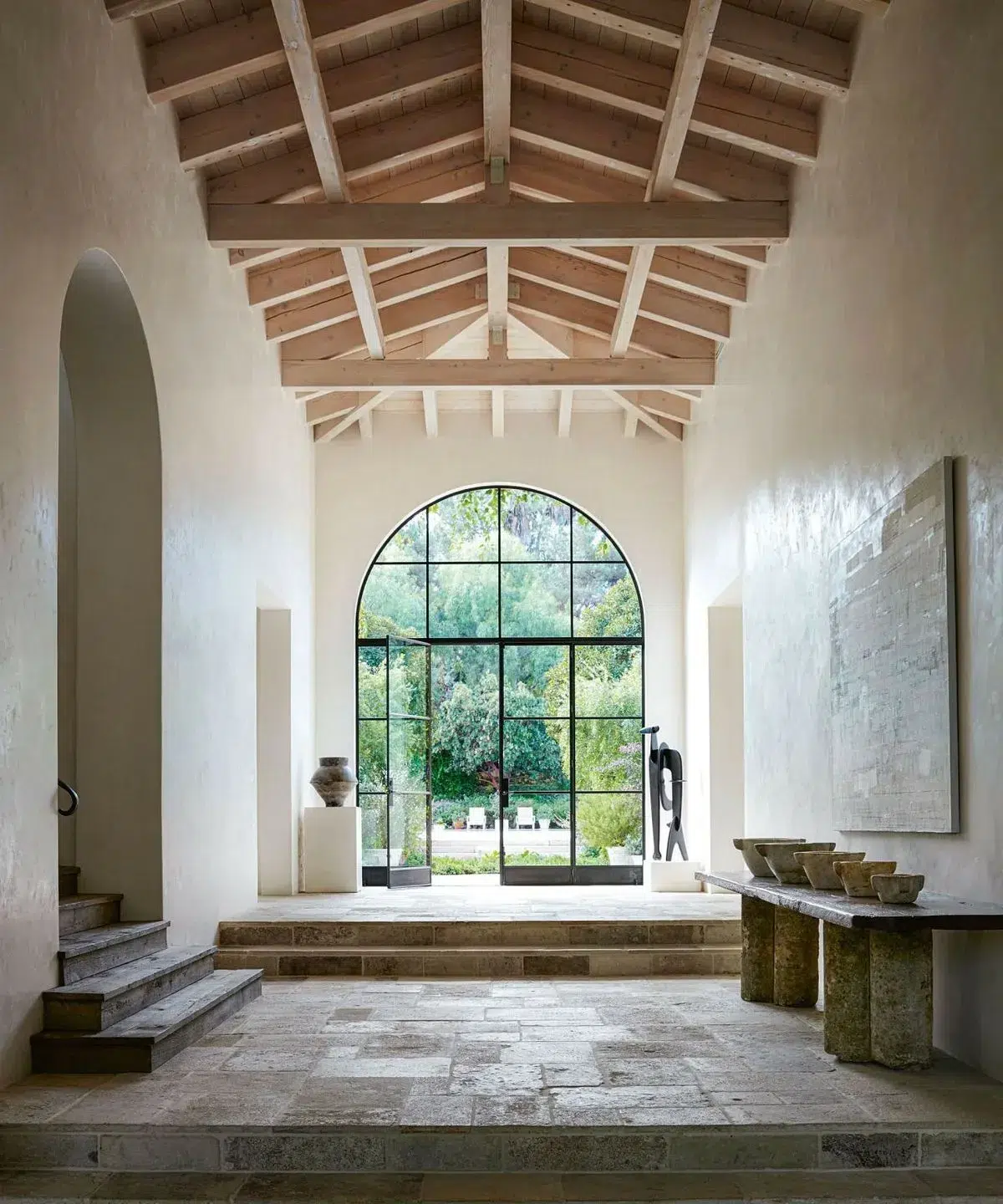
Popular Mediterranean architecture treasures centuries of climatic wisdom. Contemporary architects in Alicante are rediscovering and perfecting elements that our ancestors used intuitively to create cool and habitable spaces.
The Courtyard as Thermal Regulator
The central courtyard, a distinctive element of traditional Murcian architecture, is reinterpreted as a powerful natural air conditioning system. In modern passive houses, the courtyard functions as:
- Thermal chimney: Air heats during the day and rises, creating currents that ventilate the dwelling
- Coolness reservoir: During the night, courtyard surfaces cool and act as thermal sinks
- Natural humidifier: Vegetation and water elements provide controlled humidity
High Thermal Mass Walls
The thick stone or rammed earth walls, typical of traditional Alicantine construction, find their modern equivalent in high thermal mass construction systems that incorporate:
- Cellular concrete: Provides insulation and thermal mass simultaneously
- Ventilated Trombe walls: Accumulate solar heat during the day and release it gradually
- Continuous insulation systems: Eliminate thermal bridges whilst maintaining interior thermal mass
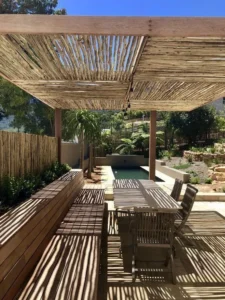
Pergolas and Overhangs: Intelligent Solar Protection
In Mediterranean passive house design, solar protection is not a complement but a fundamental architectural element. Architects in Murcia and Alicante are developing sophisticated solar control systems that go beyond traditional solutions.
Integrated Bioclimatic Pergolas
Modern pergolas incorporate technology that converts them into active climate control elements:
- Adjustable louvres: Allow gradual light entry according to season
- Integrated misting systems: Cool the environment through controlled evaporation
- Photovoltaic structures: Generate energy whilst providing shade
Overhangs Calculated According to Solar Path
Overhang design in Mediterranean passive houses requires precise calculations based on each location’s specific latitude. In Alicante (38°20’N) and Murcia (37°59’N), optimal overhangs must:
- Block high summer sun (elevation > 70°) when cooling is priority
- Allow low winter sun entry (elevation < 40°) for thermal gain
- Integrate lateral protection systems for western rays, especially critical in Mediterranean climates
An architect specialising in sustainable construction in Alicante comments: “Each degree of latitude requires overhang adjustments. The difference between a comfortable dwelling and one that overheats can lie in 20 centimetres of miscalculated overhang.”
Strategic Orientation and Harnessing Mediterranean Breezes
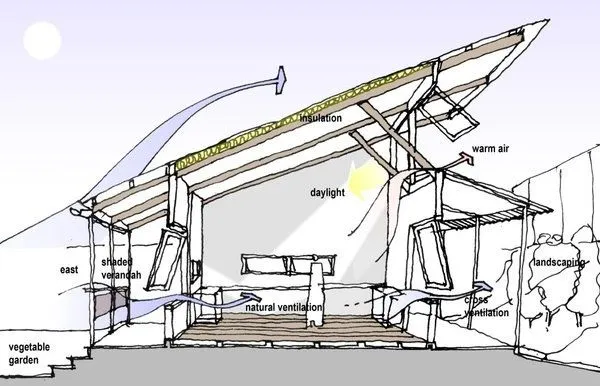
The orientation of a Mediterranean passive house must optimise three factors simultaneously: winter solar gain, summer solar protection, and dominant breeze utilisation. On the Spanish Mediterranean coast, this implies specific considerations that local architects have perfected.
Optimal Solar Orientation
For dwellings in Murcia and Alicante, the ideal orientation combines:
- Main façade facing south: Maximises winter solar gains
- 15-30° deviation towards southeast: Takes advantage of morning sun and avoids evening overheating
- Reinforced western protection: Minimises the impact of afternoon rays, the hottest of the day
Harnessing Dominant Breezes
The Mediterranean breeze regime offers exceptional opportunities for natural ventilation:
- Diurnal sea breeze (southeast-east): Cools during the hottest hours
- Nocturnal land breeze (northwest): Facilitates night cooling
- Westerly winds: Strategically channelled for cross-ventilation
Architects design ventilation systems that harness these natural patterns through:
- Strategically positioned operable windows: Create directed air currents
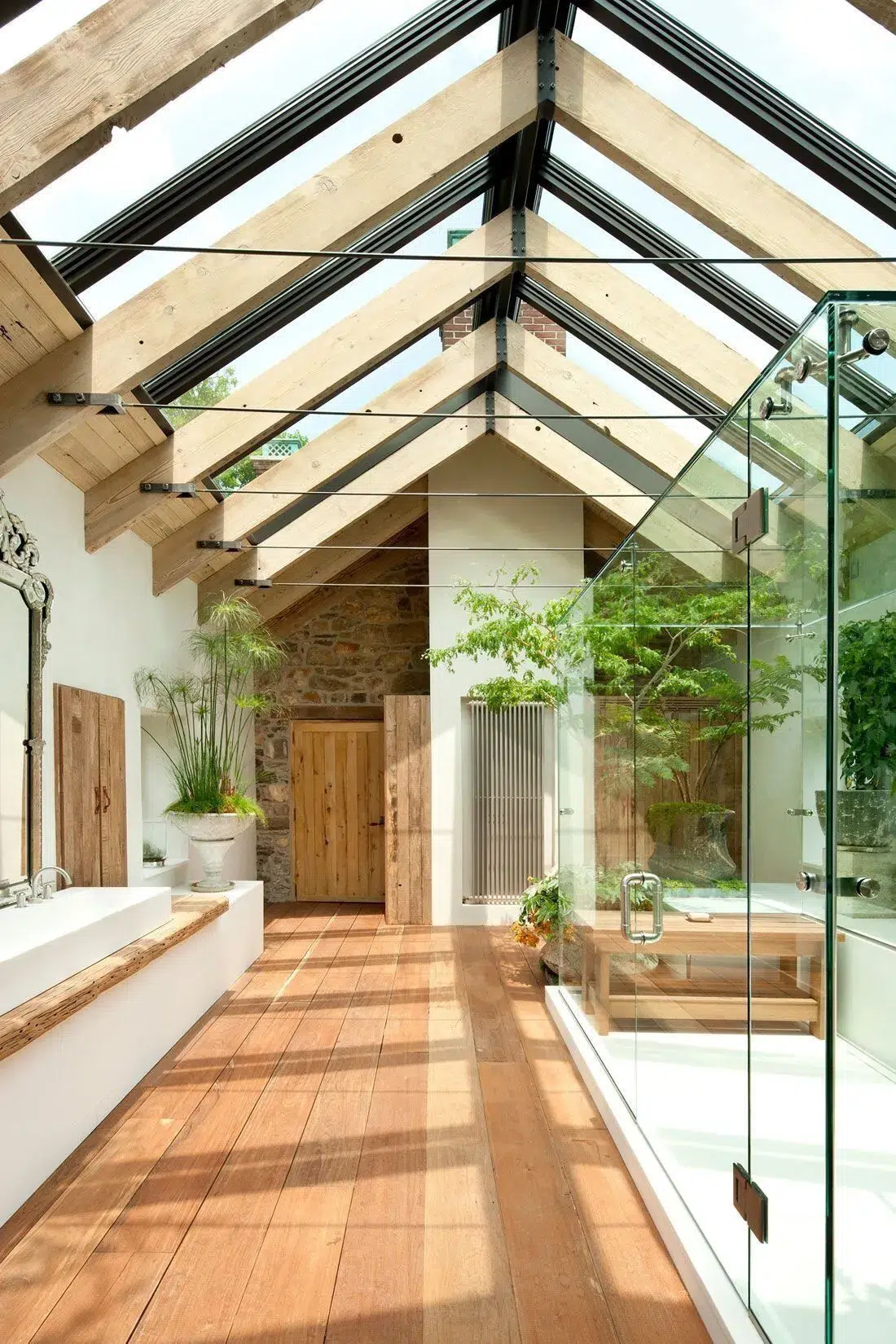
- Chimney effect skylights: Enhance natural convection ventilation
- Wind courtyards: Capture and direct breezes towards the interior
Technologies and Materials for Mediterranean Passive Houses
Sustainable construction in Mediterranean Spain has developed an ecosystem of materials and technologies specifically adapted to the local climate. Architects in Alicante and Murcia integrate these solutions in projects that achieve the highest energy efficiency standards.
Advanced Insulation Systems
In a Mediterranean climate, insulation must be multifunctional:
- Reflective insulation: Reflects direct solar radiation
- Phase change materials (PCM): Store and release thermal energy gradually
- Natural insulation: Cork, wood fibre and other low environmental impact local materials
High-Performance Windows
Windows in Mediterranean passive houses must balance multiple requirements:
- Selective triple glazing: Low solar factor (g ≤ 0.35) to avoid overheating
- Thermally broken frames: High-performance aluminium or PVC carpentry
- Optimised opening systems: Facilitate controlled night ventilation
Energy Recovery Systems
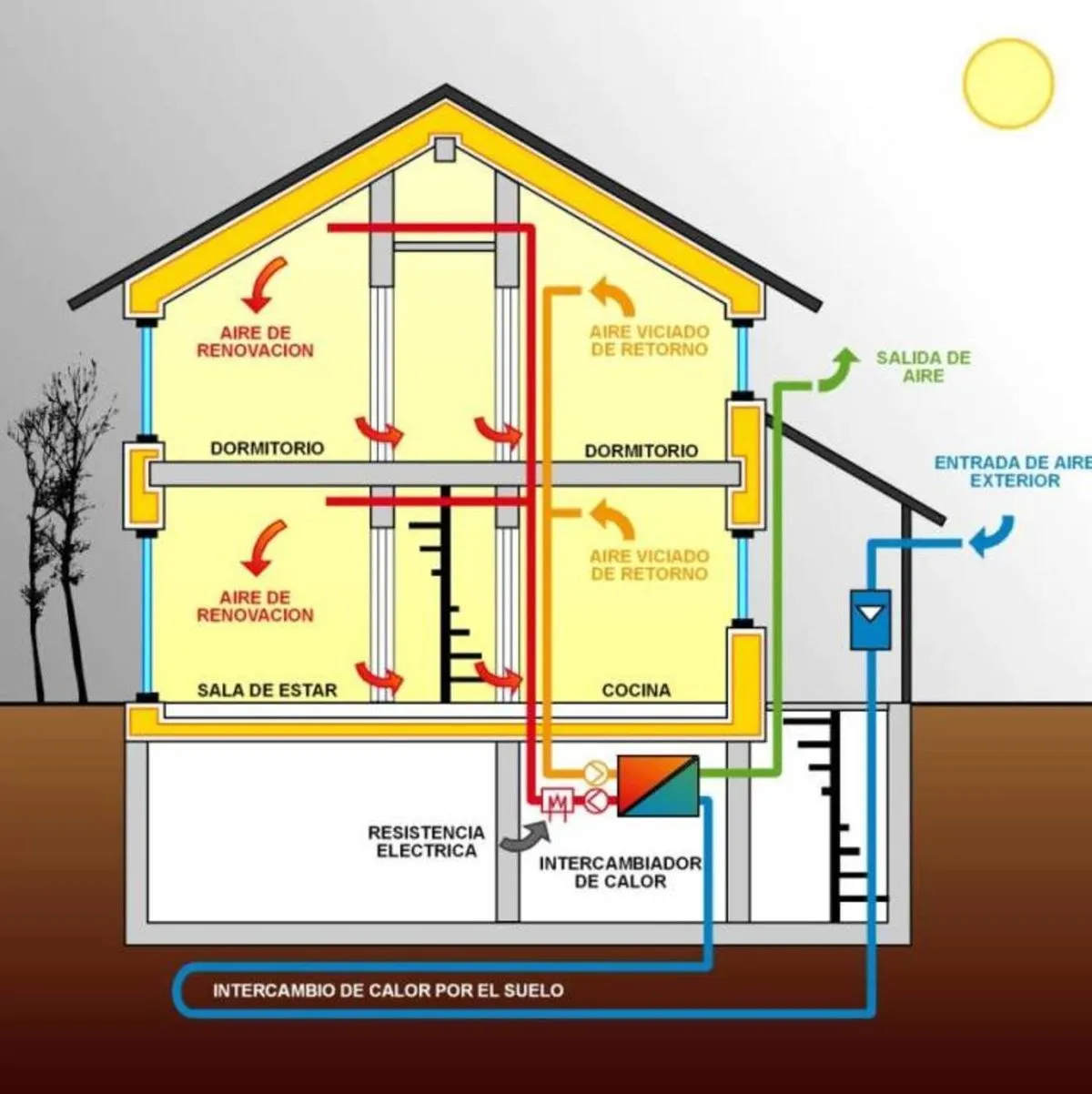
Whilst passive houses minimise air conditioning needs, mechanical ventilation systems with heat recovery are fundamental:
- High-efficiency heat exchangers (> 85% recovery)
- Evaporative cooling systems for dry climates like Murcia
- High-efficiency heat pumps for residual air conditioning needs
Case Studies: Pioneer Projects in Alicante and Murcia
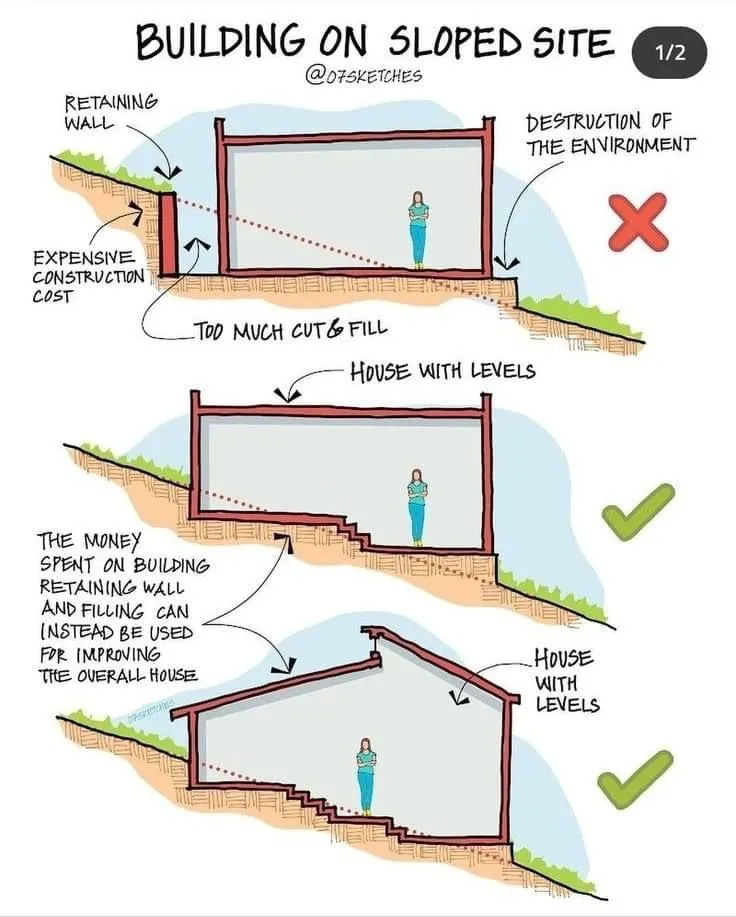
Theory comes to life in real projects that demonstrate the viability and effectiveness of Mediterranean passive houses. Several projects in Alicante and Murcia have established new standards in sustainable construction.
Passivhaus in San Pedro del Pinatar (Murcia)
This project, completed in 2023, demonstrates how to adapt the Passivhaus standard to a Mediterranean coastal climate:
- Energy consumption: 12 kWh/m²/year (80% less than a conventional dwelling)
- Outstanding elements: Integrated photovoltaic pergola, heat recovery ventilation system adapted to high humidity
- Additional cost: 8% over conventional construction with 7-year payback
Bioclimatic Dwelling in Orihuela (Alicante)
An example of perfect integration between traditional architecture and passive technology:
- Characteristics: Central courtyard reinterpreted as thermal regulator, improved rammed earth walls with natural insulation
- Results: Stable interior temperature between 22-26°C without active air conditioning for 11 months per year
- Innovation: Rainwater collection system integrated into bioclimatic strategy
Sustainable Residential Complex in Cartagena (Murcia)
This project demonstrates the scalability of Passivhaus principles in collective housing developments:
- Technical data: 24 dwellings with Passivhaus certification, optimised solar orientation, community renewable energy systems
- Economic benefits: 85% reduction in air conditioning costs, resale value 15% above local market
Smart Investment: Costs, Subsidies and Economic Returns
Sustainable construction in the form of Mediterranean passive houses represents a smart investment with multiple levels of return. Architects in Alicante and Murcia can provide detailed cost-benefit analyses specific to each project.
Cost Structure
A typical Mediterranean Passivhaus presents:
- Initial additional cost: 6-12% compared to conventional construction
- Main components: Advanced insulation (30%), high-performance windows (25%), ventilation systems (20%), airtightness and construction details (25%)
Available Subsidies and Grants
Public administrations have established specific support programmes:
- Recovery, Transformation and Resilience Plan: Up to €18,600 per dwelling for energy rehabilitation
- Murcia Regional Grant Programme: 20-40% subsidies for sustainable construction
- Alicante Tax Incentives: IBI and ICIO reductions for high-efficiency dwellings
Return on Investment
Economic studies demonstrate attractive returns:
- Annual energy savings: €800-1,200 per family dwelling
- Payback period: 6-9 years, considering subsidies
- Property appreciation: 10-15% above the conventional market
- Maintenance costs: 40% lower due to reduced installation complexity
“Our clients discover that a Passivhaus is not only an investment in sustainability but in quality of life and long-term economic profitability,” notes an architect specialising in sustainable construction in Murcia.
The Future of Mediterranean Sustainable Construction
Mediterranean passive houses represent only the beginning of a broader transformation in the construction sector. Visionary architects in Alicante and Murcia are developing concepts that go beyond individual energy efficiency towards integrated urban sustainability systems.
Passivhaus Urban Developments
Future urban developments in Mediterranean Spain will integrate:
- Energy microgrids: Community renewable energy generation and storage systems
- Integrated sustainable mobility: Electric vehicle infrastructure powered by community solar energy
- Intelligent water management: Rainwater and greywater collection, treatment and reuse systems
Material Innovations
Research in materials for Mediterranean sustainable construction advances towards:
- Local biomaterials: Development of construction materials based on regional agricultural waste
- Smart materials: Surfaces that change their properties according to climatic conditions
- Modular construction systems: Facilitate Passivhaus construction, reducing costs and timeframes
Advanced Certifications
Beyond the Passivhaus standard, new certifications specific to the Mediterranean climate emerge:
- Mediterranean Passive Standard: Specific adaptation for latitudes 35-45°N
- Cradle to Cradle Certification: Evaluates the complete lifecycle of materials and systems
- Integrated biodiversity standards: Certify positive impact on local ecosystems
Conclusion: Towards a New Era of Mediterranean Architecture
Mediterranean passive houses represent the perfect synthesis between tradition and innovation, between environmental respect and human comfort. In regions like Alicante and Murcia, where sunshine is abundant and sea breezes offer natural cooling, this architectural approach is not just desirable but inevitable.
Architects specialising in sustainable construction in these regions have demonstrated that it is possible to create homes that consume up to 90% less energy than conventional constructions, maintaining superior comfort standards and offering attractive economic returns.
For those contemplating building or renovating in Mediterranean Spain, the choice is clear: seeking an architect in Alicante or Murcia who masters passive architecture principles means investing in a future where sustainability, comfort and profitability converge in harmony.
Mediterranean sustainable construction has matured from isolated experiments to become a consolidated professional practice. The coming years will see its expansion from pioneer projects towards a generalised standard, transforming not only our homes but our relationship with the Mediterranean environment we inhabit.