In the exclusive world of high-end residential architecture, materials have always been much more than simple construction elements. They are statements of intent, tangible manifestations of status and, increasingly, representatives of a new era where technology, sustainability and luxury converge to create spaces that challenge our traditional understanding of home. With its rich architectural tradition and innovative contemporary design scene, Spain is positioning itself as an interesting laboratory where these new materials come to life in spectacular residences that look to the future. Let’s explore how new materials in elite residential architecture are transforming the design of high-end homes.

New materials in elite residential architecture: rethinking concrete design
UHPC: The Superhero of Construction Materials
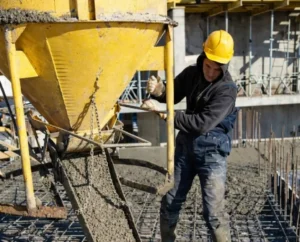
Ultra-High Performance Concrete (UHPC) is radically transforming what we thought possible in residential architecture. With strength up to ten times greater than conventional concrete, this material allows for the creation of incredibly thin yet extraordinarily strong structures.
In the exclusive La Finca development in Madrid, architect Joaquín Torres used UHPC to create a 12-metre cantilever that seems to defy gravity in a villa valued at more than €7 million. “The client wanted something impossible: a terrace that appeared to float above the garden without columns obstructing the view,” comments Torres. “A decade ago, I would have simply told him it was structurally unfeasible. Today, thanks to UHPC, the impossible has become routine in our luxury projects.”
This material not only allows for these structural feats, but its aesthetic versatility is redefining the appearance of modern luxury. In Barcelona, the firm Arquitectes Associats has developed UHPC panels with quartz inlays that, under Mediterranean light, generate iridescent effects that change with the movement of the sun, creating literally living façades that transform their appearance throughout the day.
Translucent Concrete: Light and Solidity in Perfect Harmony
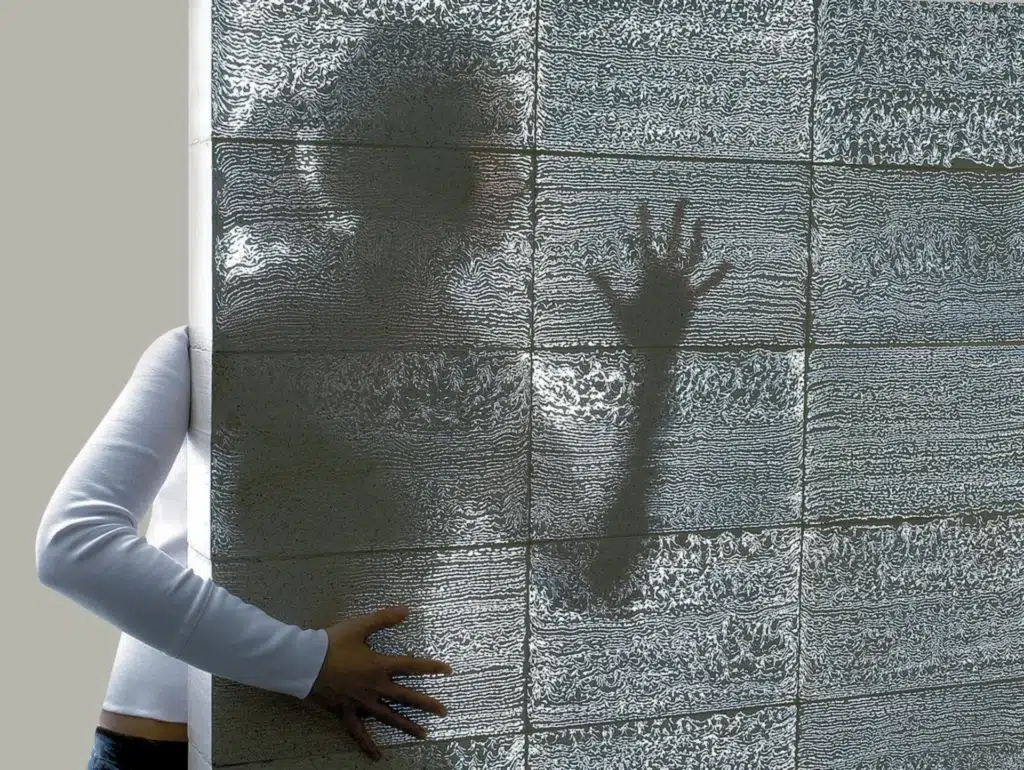
If there is one material causing a genuine revolution in the elite residential segment, it is translucent concrete. Originally developed by Hungarian architect Áron Losonczi, its commercial version of Litracon has found one of its most receptive markets in Spain.
On the Costa del Sol, “Villa Luz” designed by the A-cero studio, incorporates entire walls of this material, which allows natural light to pass through whilst maintaining privacy and structural solidity. During the day, the interior is bathed in diffuse, changing light; at night, the dwelling transforms into an architectural lantern that projects diffused silhouettes onto the surrounding landscape.
“The fascinating thing about this material is how it breaks with the traditional dichotomy between mass and transparency,” explains Rafael Llamazares, the architect responsible for the project. “The owners, a Finnish couple, wanted to maintain that connection with natural light so important in Nordic culture, but without sacrificing the privacy they sought by moving to Spain.”
Translucent concrete is not cheap—its price ranges between €2,000 and €4,000 per square metre—but it is finding its place in residences where budget is not an issue and aesthetic innovation is a priority.
The New Skin of Architecture: Façades that Breathe, Think and Feel
Self-cleaning Materials: The Luxury of the Immaculate
In the exclusive neighbourhood of Pedralbes in Barcelona, a recently built mansion always looks impeccable despite urban pollution and occasional rain laden with Saharan dust. Its secret lies not in an army of cleaners, but in its glass façade treated with titanium dioxide, a photocatalytic material that, activated by sunlight, decomposes organic dirt and creates a superhydrophilic surface where rainwater spreads in a thin film that washes away residues.
This material, popularised in emblematic projects such as the Jubilee Church in Rome, is finding its most lucrative application in the elite residential sector. “It’s like having a façade that washes itself,” comments Manuel Ocaña, an architect specialising in high-end housing. “For our clients, who tend to travel frequently, it represents the peace of mind of knowing that their home will always maintain that impeccable appearance that reflects their status, regardless of environmental conditions or their physical presence.”
The most spectacular case is probably that of a villa in the La Zagaleta development in Marbella, where these self-cleaning materials have been applied to a micro-treated marble façade. The result is a surface that maintains its immaculate whiteness despite being surrounded by vegetation and exposed to Mediterranean elements.
Kinetic Façades: When Architecture Comes to Life
If there is something that defines the new architectural luxury, it is the capacity for adaptation and personalisation. Kinetic façades perhaps represent the ultimate expression of this concept, transforming static buildings into living organisms that respond to environmental conditions and the desires of their inhabitants.
In Ibiza, the architectural firm ARUP recently completed a summer residence for a technology magnate whose façade is composed of thousands of individually motorised aluminium slats that can be reconfigured to maximise views, control light entry or ensure privacy. The system, controlled by artificial intelligence, learns the usage patterns and preferences of residents, anticipating their needs.
“The most surprising thing is not the technology itself, but how it changes our perception of space,” comments Sofia Tsinikos, the engineer responsible for the system. “During a dinner organised by the owners, we programmed the façade to open gradually as the sun set, creating a spectacle where the architecture itself became part of the entertainment.” With an installation cost that exceeded €2 million just for the façade system, this type of solution represents the pinnacle of personalised luxury.
Thermochromic Materials: Architectural Chameleons
The ability to change colour in response to temperature is no longer exclusive to reptiles but is becoming a feature of the most exclusive residences. Thermochromic materials, which modify their optical properties according to ambient temperature, are finding fascinating applications in the elite residential sector.
In a villa on the Costa Brava, architect Ricardo Bofill Jr. has used thermochromic panels as a central element of the south façade. During the summer months, when the outdoor temperature exceeds 25°C, the panels acquire a lighter tone that reflects a greater proportion of solar radiation, naturally reducing the interior temperature. In winter, the process is reversed, darkening to capture more heat.
“The fascinating thing is that every day the house presents a slightly different appearance,” explains Bofill. “It’s not just a question of energy efficiency, but of creating a direct visual connection with the changing natural environment. The house literally reflects the climate that surrounds it.” The owner, a Swiss technology entrepreneur, adds: “My guests always ask me if I’ve repainted the house since their last visit. They love discovering that the dwelling has its own chromatic metabolism.”
The Reimagined Interior: Intelligent Surfaces for Extraordinary Lives
Translucent Wood: The Reinvention of the Traditional
Few innovations combine tradition and avant-garde so perfectly as translucent wood. Through chemical processes that extract lignin (the component that gives wood its opacity) and replace it with polymeric resins, a material is obtained with the warmth and texture of wood but with light transmission properties.
In Valencia, interior designer Francesc Rifé has used translucent maple wood panels to separate the master bedroom from the bathroom in a penthouse with views of the Mediterranean. “We sought to maintain spatial and light continuity without renouncing a certain delimitation of areas,” explains Rifé. “Translucent wood allowed us to create a smooth transition: during the day, the wood grain projects organic patterns on the floor; at night, the bathroom light creates a warm halo visible from the bedroom.”
The owner, a film director who prefers to remain anonymous, highlights another unexpected quality: “When it rains, the light that passes through these partitions acquires an aquatic quality, creating an almost dreamlike atmosphere. It’s like living inside a cinematic scene that changes with the weather.”
Flexible Stone: The Impossible Made Reality
Perhaps one of the most surprising developments in the field of architectural materials is flexible stone. By extracting extremely thin sheets (of just 2 mm) of natural stones such as marble, granite or slate, adhered to a flexible backing of natural fibres or resins, traditionally rigid materials can be bent, curved and adapted to complex geometries.
In Madrid, the Langarita-Navarro studio has recently completed the renovation of a penthouse in the Salamanca neighbourhood where they used flexible Carrara marble to create a completely integrated bathtub, without visible joints, that seems sculpted from a single piece. “The client, an art collector, wanted something that fused functionality and sculpture,” comments María Langarita. “Flexible marble allowed us to create organic forms impossible with traditional stone working methods.”
Most surprisingly, these flexible stone sheets weigh only 20% of their solid stone equivalent, which greatly expands the possibilities for application. In Mallorca, a villa designed by architect Alberto Campo Baeza uses flexible granite on the ceiling of the main room, creating a contemporary cave effect that plays with our perception of weight and gravity.
Sustainability and Luxury: new materials in elite residential architecture
Bio-Fabricated Materials: When Nature and Technology Collaborate
Elite residential architecture is experiencing a significant shift towards sustainability, but without renouncing exclusivity. Bio-fabricated materials, developed through processes that use living organisms to create new compounds, are gaining prominence in the most advanced homes.
In an ecological development near Girona, the Cloud 9 studio led by Enric Ruiz-Geli has completed a residence where thermal insulation comes from panels produced with fungal mycelium. This material, besides being completely biodegradable, offers thermal and acoustic properties superior to many synthetic insulators.
“At first, the clients were sceptical,” recalls Ruiz-Geli. “The idea of having fungi in the walls seemed risky to them. But when they understood that it was the processed and stabilised organism, and verified its exceptional thermal performance, they became enthusiastic advocates.” The owner, a businesswoman from the technology sector, adds: “I love explaining to my guests that my house is literally alive in a certain sense. It’s an excellent conversation topic during dinners.”
In Andalusia, another bio-fabricated innovation is finding application in luxury residences: bricks cultivated using bacteria. These materials, originally developed by researchers at the University of Granada, use specific bacteria that precipitate calcium carbonate, creating a material with properties similar to cement but with a carbon footprint up to 90% lower.
Thermally Modified Wood: Tradition Reinvented
Wood, the traditional material par excellence, is experiencing a reinvention thanks to thermal modification processes. This treatment, which involves heating the wood to temperatures between 180 and 230°C in an atmosphere with low oxygen content, transforms its molecular structure, improving its dimensional stability, moisture resistance and durability, without the need for toxic chemical treatments.
In the Sierra de Guadarrama, an impressive villa designed by the Selgas Cano studio uses thermally modified ash both on the façade and in the interiors. “The colour transformation is fascinating,” comments José Selgas. “Ash, normally light, acquires tones similar to tropical woods such as iroko or teak, but without the ethical problems associated with importing these species.”
The most interesting aspect is how this material combines sustainability and exclusivity. “Our clients wanted ecological materials that didn’t appear to be an aesthetic compromise,” adds Selgas. “Thermally modified wood has that quality of seeming exotic, precious and exclusive, but it is completely sustainable and local.”
The Future is Already Here: Materials that Anticipate What’s Coming
CO₂-Capturing Concrete: Building with Negative Carbon
At the forefront of innovation are materials that not only reduce their environmental impact but actively contribute to mitigating global problems. CO₂-capturing concrete, developed by the Spanish startup CarbonCure in collaboration with CSIC researchers, incorporates carbon dioxide recovered from industrial processes into its formulation, where it mineralises and becomes permanently sequestered.
In a recent villa in Sotogrande designed by the Barozzi Veiga studio, this CO₂-capturing concrete was used for the entire structure, sequestering the equivalent of 55 tonnes of carbon dioxide. “It’s fascinating to think that this house not only provides shelter for its inhabitants but is also actively helping to reduce greenhouse gases,” comments Fabrizio Barozzi. “It’s the perfect definition of new luxury: exclusivity with purpose.”
Piezoelectric Ceramics: The Material that Generates Energy
Another fascinating development finding its way into the most exclusive residences is piezoelectric ceramics. This material converts mechanical pressure into electricity, allowing energy to be generated from everyday activities such as walking.
In Barcelona, a recently completed mansion in Pedralbes incorporates piezoelectric tiles in the areas of highest foot traffic. “Each step generates approximately 8 watts of electricity,” explains Carmen Pigem of the RCR Arquitectes studio. “It’s not enough to supply the entire house, of course, but it powers the LED lighting in the corridors and part of the home automation.”
The most interesting aspect is how this technology is changing the relationship between inhabitants and their environment. “The owners tell me they are now aware of how their physical movements contribute to the functioning of the house,” adds Pigem. “There is something poetic in that relationship where the inhabitant literally energises the space they inhabit.”
Conclusion: The New Paradigm of Architectural Luxury
The revolution in materials for elite residential architecture is redefining not only how these exceptional dwellings are built but also how we interact with them. The new paradigm of architectural luxury is no longer measured exclusively by cost or exclusivity, but by innovation, sustainability and the ability to create unique living experiences.
Spain, with its tradition of architectural excellence and its growing ecosystem of material innovation, is positioning itself as a territory where these global trends find particularly interesting expressions. From the kinetic façades of Ibiza to the CO₂-capturing concrete in Sotogrande, the country is becoming a living laboratory where the future of elite residential architecture materialises in concrete projects that challenge our expectations.
These innovations, initially accessible only for the most exclusive projects due to their development and implementation costs, will eventually find broader applications, gradually transforming the entire construction sector. As has happened so many times in history, what today is a luxury within reach of few, tomorrow will be the standard for many.
Meanwhile, these extraordinary homes are not just private refuges for their fortunate owners, but true built manifestos that allow us to glimpse what the homes of the future will be like: smarter, more sustainable, more adaptable and, in many ways, more alive than ever.
Would you like to incorporate some of these innovative materials into your next residential project?
At Pacheco Architects, we have the experience and vision to design exclusive homes that combine technology, sustainability, and cutting-edge design. Get in touch and discover how we can turn your project into an architectural work that truly stands out.