Introduction
The Spanish architectural diversity is as vast as its geography, climate, and cultural heritage. From the snow-capped Pyrenees to the sun-drenched Mediterranean coast, from the verdant Atlantic regions to the arid central plateau, each area has developed distinct architectural expressions shaped by historical influences, available materials, climatic considerations, and cultural identities.
This diversity reflects Spain’s complex history: a crossroads where Iberian, Roman, Visigothic, Islamic, Jewish, and Christian traditions have converged, competed, and melded over millennia. The result is a rich architectural tapestry that varies dramatically from region to region, offering invaluable insights into Spain’s multi-layered identity.
This article explores how different Spanish regions have developed unique architectural languages that respond to local needs while expressing cultural values and historical memories. From Andalusia’s Moorish palaces to Catalonia’s Art Nouveau fantasies, from Galicia’s granite fortresses to the Basque Country’s avant-garde museums, Spanish architecture presents a compelling study in regional expression and adaptation.

Historical Context
To understand Spain’s architectural diversity, we must first appreciate its historical complexity. The Iberian Peninsula has experienced numerous cultural transformations:
- Pre-Roman settlements: Iberian, Celtic, and Tartessian cultures established early building traditions.
- Roman Hispania: Romans introduced advanced engineering, urban planning, and monumental architecture.
- Visigothic period: Following Rome’s fall, these Germanic rulers adapted Roman forms with distinctive ornamental elements.
- Al-Andalus: The Islamic period (711-1492) profoundly influenced southern architecture, introducing sophisticated mathematics, decorative arts, and hydraulic systems.
- Reconquista: The gradual Christian reconquest created boundaries between regions and fostered distinctive regional identities.
- Imperial Spain: During the 16th and 17th centuries, wealth from American colonies fuelled architectural ambitions across Spain.
- Regional autonomy movements: From the 19th century onward, growing regional consciousness often expressed itself architecturally.
These historical processes unfolded unevenly across Spanish territories, creating distinct regional architectural trajectories that continue to evolve today.

Andalusia: Moorish Influence and Mediterranean Sensibilities
Andalusia’s architecture bears Spain’s strongest imprint of Islamic culture, creating a unique aesthetic that blends Moorish refinement with subsequent Christian adaptations.
Key Characteristics
- Islamic Heritage: The most striking examples are monumental complexes like the Alhambra in Granada, the Mezquita in Córdoba, and the Giralda in Seville, which showcase sophisticated mathematics, complex geometric decoration, and innovative water management.
- Mudejar Style: After the Christian reconquest, Muslim craftsmen continued working, creating a unique fusion style seen in churches and palaces across the region. Key features include horseshoe arches, intricate plasterwork (sebka), wooden coffered ceilings (artesonados), and ceramic decoration.
- Whitewashed Architecture: The iconic white villages (pueblos blancos) of Andalusia represent a vernacular response to intense summer heat, with thick walls, small windows, and reflective white surfaces that minimize heat absorption.
- Courtyards and Gardens: Central to Andalusian domestic architecture is the patio or courtyard, often featuring fountains, plantings, and colonnaded galleries that create natural cooling systems and private outdoor spaces.
- Regionalism: Within Andalusia itself, distinct sub-regional styles developed, from the maritime traditions of Cádiz to the mining architecture of Río Tinto.
The Alhambra in Granada exemplifies Andalusian refinement: its delicate proportions, water features, and intricate decoration create spaces that engage all senses, demonstrating how architecture can respond to hot, arid conditions while achieving exceptional aesthetic sophistication.

Catalonia: Modernism and Mediterranean Innovation
Catalonia’s distinctive architectural identity emerged strongly in the late 19th and early 20th centuries, aligned with its industrial prosperity and cultural renaissance.
Key Characteristics
- Modernisme: Catalonia’s unique interpretation of Art Nouveau produced extraordinary works by architects like Antoni Gaudí, Lluís Domènech i Montaner, and Josep Puig i Cadafalch. Buildings such as Casa Batlló, Palau de la Música Catalana, and the Sagrada Familia showcase organic forms, technical innovation, and regionalist symbolism.
- Medieval Heritage: The Catalan Gothic style developed distinct characteristics, including wide naves, octagonal towers, and minimal ornamentation, as seen in Santa Maria del Mar in Barcelona.
- Traditional Masía: Rural Catalonia developed the masía, a distinctive farmhouse type with thick stone walls, a central arched gallery, and efficient organization around production needs.
- Mediterranean Urban Planning: The Example district of Barcelona, designed by Ildefons Cerdà, represents an innovative approach to urban planning with its octagonal blocks, chamfered corners, and interior courtyards.
- Contemporary Prominence: Barcelona’s transformation for the 1992 Olympics and continued architectural innovation has positioned Catalan architecture at the forefront of Spanish design.
Gaudí’s work, particularly the still-unfinished Sagrada Familia, epitomizes Catalonia’s architectural ambition, combining cutting-edge structural innovation with deeply rooted cultural and natural symbolism in ways that continue to inspire contemporary architects worldwide.
Galicia: Atlantic Resilience and Celtic Heritage
North-western Spain’s architecture reflects its Celtic heritage, abundant rainfall, Atlantic orientation, and isolation from other Spanish regions.
Key Characteristics
- Granite Construction: Galicia’s abundant granite defines its architectural character, creating solid, enduring structures with distinctive silvery-grey coloration, especially evident in Santiago de Compostela’s monumental buildings.
- Romanesque Churches: The Romanesque style flourished along the Camino de Santiago, producing distinctive churches with elaborate portal sculptures and sturdy proportions.
- Hórreos: These distinctive elevated granaries, built of stone or wood on mushroom-shaped pillars, protected grain from humidity and rodents while providing ventilation through slatted walls.
- Pazos: Manor houses of the rural nobility feature defensive elements, ornate coats of arms, and careful integration with the lush landscape through gardens and balconies.
- Galerias: Glass-enclosed balconies allow inhabitants to enjoy Atlantic views while protected from frequent rainfall, creating a distinctive urban feature, especially in A Coruña.
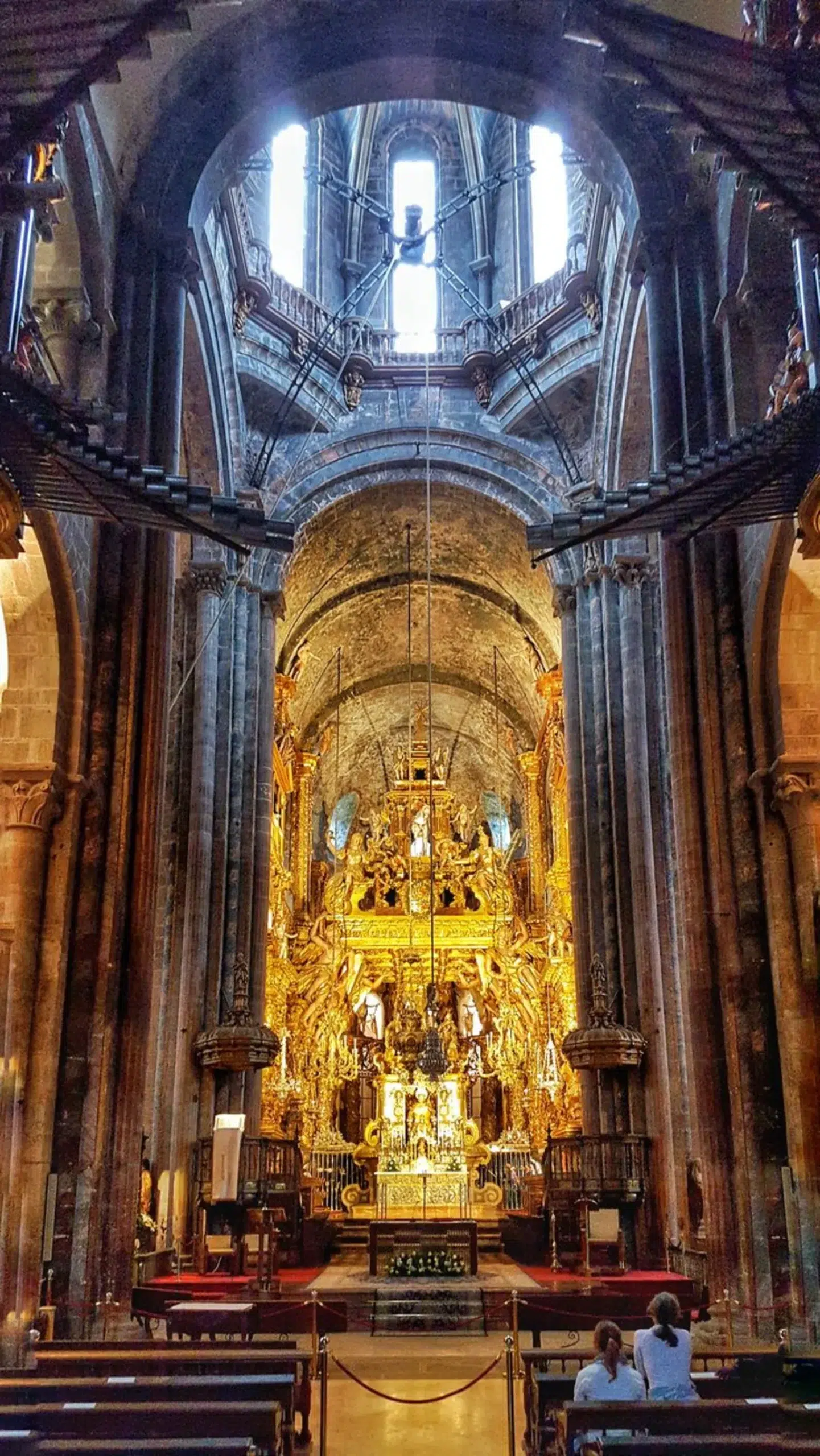
The Cathedral of Santiago de Compostela, the destination of the famous pilgrimage route, represents the pinnacle of Galician architectural achievement, with its granite Baroque façade concealing a magnificent Romanesque structure that has drawn visitors for nearly a millennium.

Basque Country: Industrial Heritage and Contemporary Vision
The Basque Country’s architecture reflects its industrial power, maritime traditions, and strong cultural identity distinct from other Spanish regions.
Key Characteristics
- Baserri: The traditional Basque farmhouse features a distinctive timber-frame structure with overhanging eaves, a central arched entrance, and integrated living and working spaces under one roof.
- Industrial Architecture: The region’s early industrialization produced significant industrial complexes, from the Vizcaya Bridge (the world’s oldest transporter bridge) to factory complexes that now form important industrial heritage sites.
- Modernist Expression: The late 19th-century wealth generated distinctive urban architecture, especially in Bilbao and San Sebastian, with eclectic styles and local adaptations of European trends.
- “Bilbao Effect”: Frank Gehry’s Guggenheim Museum Bilbao catalysed urban transformation and established a precedent for architectural tourism that many cities have sought to emulate.
- Contemporary Innovation: Architects like Rafael Moneo, Eduardo Chillida, and Peña Ganchegui have developed distinctive approaches that engage with Basque identity while participating in international architectural discourse.
The transformation of Bilbao from a declining industrial centre to a cultural destination demonstrates how architecture can drive economic and social revitalization, with the titanium-clad Guggenheim serving as both a symbol and catalyst of the region’s reimagined identity.

Castile: Austerity and Monumentality
The central Spanish plateau, encompassing both Castile-León and Castile-La Mancha, developed architecture characterized by monumentality, religious expression, and adaptation to extreme continental climate conditions.
Key Characteristics
- Romanesque Abundance: Castile-León contains Europe’s greatest concentration of Romanesque buildings, with churches like San Martín de Frómista showcasing the style’s robust simplicity.
- Gothic Cathedrals: The region’s prosperity during the 13th-15th centuries funded magnificent cathedrals in Burgos, León, and Segovia, featuring increasingly elaborate stone tracery and stained glass.
- Castilian Vernacular: Adobe and brick construction predominate in rural areas, with thick walls providing insulation against temperature extremes and minimal ornamentation reflecting pragmatic values.
- Plateresque Style: This distinctively Spanish Renaissance variation features elaborate decoration inspired by silversmith work (plata means silver), creating intricate facades for universities and churches.
- Habsburg Monumentality: El Escorial, Philip II’s austere royal palace/monastery/mausoleum, embodies Castilian values of sobriety, geometric order, and imposing scale.
Toledo illustrates Castile’s architectural complexity, with its layered historical fabric incorporating Roman foundations, Islamic elements, Jewish heritage, Gothic cathedrals, and Renaissance palaces—all adapted to the region’s distinctive topography and climate.
Valencia: Mediterranean Light and Ceramic Traditions
Valencia’s architecture balances Mediterranean influences with distinctive local innovations, particularly in the use of ceramics and light-responsive design.
Key Characteristics
- Ceramic Expertise: Valencia’s tradition of ceramic production appears throughout its architecture, from colourful domes and church towers to the elaborate tile decorations (azulejos) that adorn public and private buildings.
- Gothic Innovations: The Silk Exchange (Lonja de la Seda) exemplifies Valencian Gothic with its twisted columns and elegant proportions, demonstrating the region’s commercial prosperity and artistic sophistication.
- Huerta Adaptations: The irrigated agricultural lands surrounding Valencia developed distinctive structures like the barraca (traditional farmhouse) with steep thatched roofs and whitewashed walls.
- Modernist Expression: The Central Market and North Station showcase Valencia’s distinctive Art Nouveau interpretation, with ceramic decoration and references to agricultural bounty.
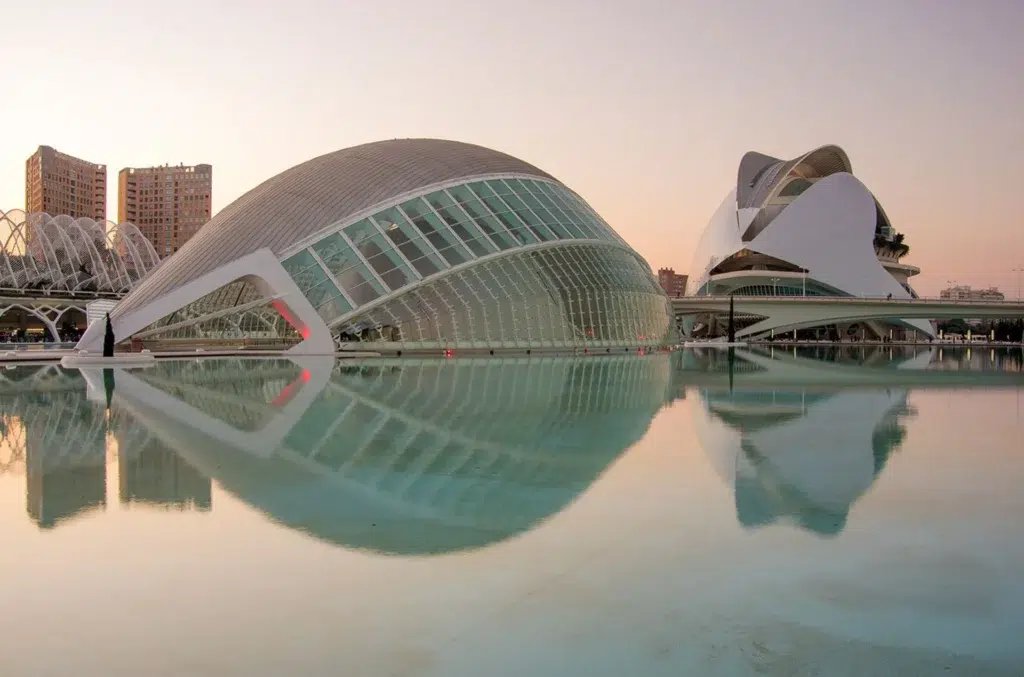
- Contemporary Statement: Santiago Calatrava’s City of Arts and Sciences represents Valencia’s contemporary architectural ambitions, with its futuristic forms reflecting both maritime heritage and forward-looking aspiration.
The historical centre of Valencia reveals architectural ingenuity in its transformation of the former Turia riverbed into a garden-lined cultural corridor after devastating floods prompted the river’s diversion—an early example of adaptive urban infrastructure that combines practicality with civic amenities.
Balearic Islands: Island Vernacular and Tourism Adaptation
The Balearic Islands—Mallorca, Menorca, Ibiza, and Formentera—developed distinctive architectural responses to their Mediterranean island context, later adapted to meet tourism demands.
Key Characteristics
- Defensive Architecture: Coastal watchtowers and fortified towns reflect centuries of vulnerability to pirate attacks, creating distinctive urban profiles like Ibiza’s UNESCO-recognized Dalt Vila.
- Rural Typologies: Each island developed specific farmhouse types, from Mallorca’s possessions with their distinctive entrance porches to Menorca’s whitewashed llocs with their distinctive chimneys.
- Islamic Influences: Water management systems and certain decorative elements reflect the islands’ period under Islamic rule, particularly evident in Palma’s Arab Baths.
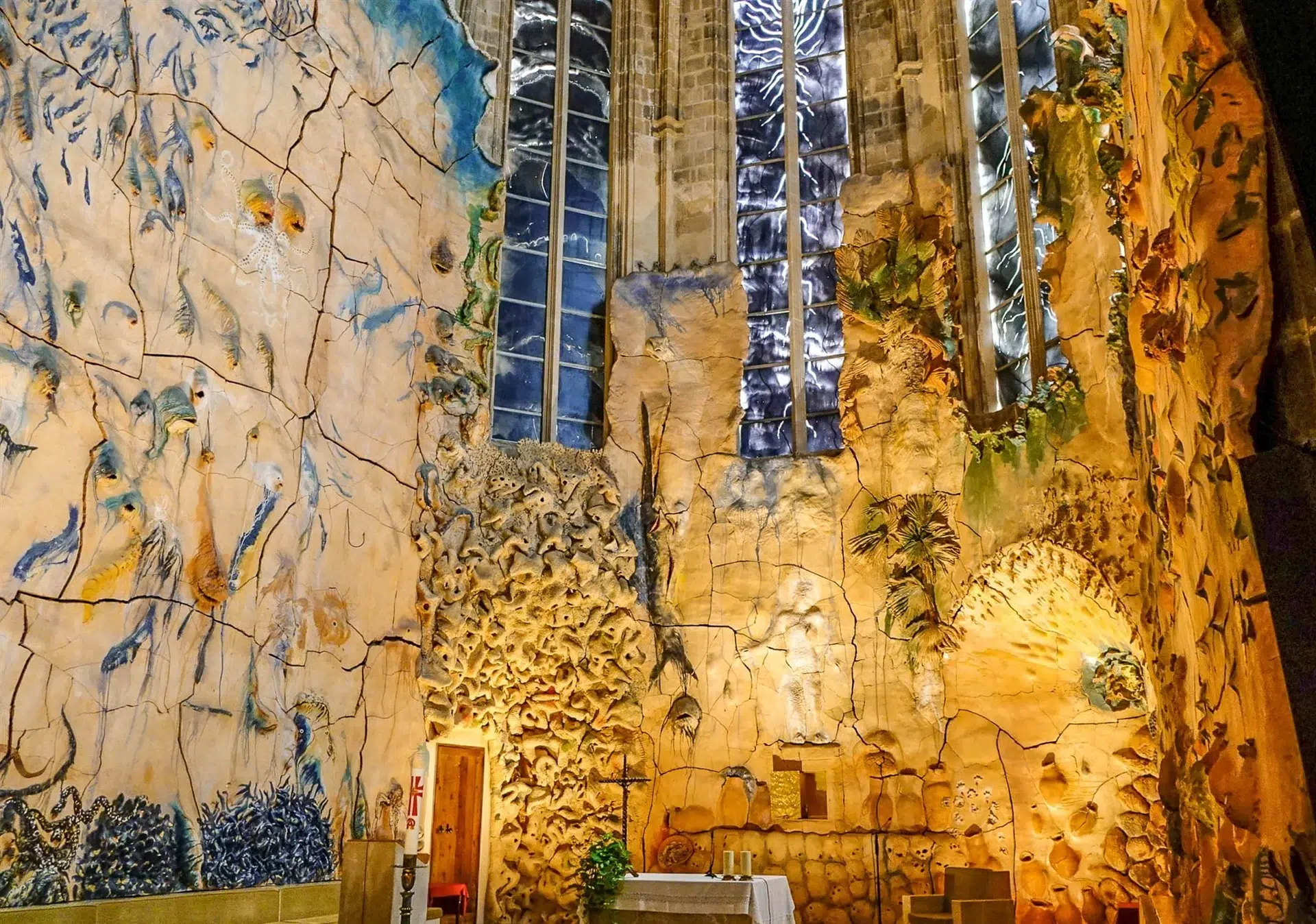
- Gothic Splendor: Palma’s Cathedral (La Seu) represents a masterpiece of Mediterranean Gothic, with Gaudi’s later interventions adding modernist elements to the historic structure.
- Tourism Architecture: From the early resort developments of the 1920s to today’s luxury villas, tourism has driven architectural innovation while also threatening traditional landscapes.
Ibiza’s vernacular architecture gained international recognition in the 1960s when modernist architects recognized its functional efficiency and aesthetic appeal, leading to a distinctive “Ibiza style” that harmonizes Mediterranean traditions with contemporary design principles.
Canary Islands: Colonial Heritage and Volcanic Adaptations
The Canary Islands’ unique position—geographically African yet culturally European—produced distinctive architecture responding to volcanic terrain, colonial history, and Atlantic trade networks.
Key Characteristics
- Wooden Balconies: Intricately carved wooden balconies, particularly in towns like La Orotava and Las Palmas, showcase cultural connections to Portuguese and Spanish colonial traditions while adapting to local materials.
- Volcanic Stone: Construction using the islands’ abundant volcanic rock created distinctive black or reddish buildings, with local masons developing specific techniques for working with this challenging material.
- Colonial Grid Planning: Towns like San Cristóbal de La Laguna (Tenerife) exemplify early colonial urban planning principles later exported to Spanish America.
- Cave Dwellings: In areas like Guadix (Gran Canaria), cave homes carved into soft volcanic tuff provide natural insulation against temperature extremes, creating unique troglodyte settlements.
- Water Management: Complex systems for capturing and distributing scarce water resources shaped both agricultural landscapes and architectural elements.
The César Manrique Foundation in Lanzarote demonstrates how contemporary architecture can engage with volcanic landscapes, as the artist-architect incorporated natural lava bubbles into his home design, establishing principles for environmentally sensitive development that influenced subsequent island architecture.

Modern Spanish Architecture: Bridging Tradition and Innovation
Contemporary Spanish architecture has gained international prominence by balancing innovation with regional identities and historical awareness.
Key Characteristics
- Post-Franco Flowering: After Franco’s death in 1975, architectural expression flourished alongside democratic transition, with regional identities finding renewed expression.
- Regional Stars: Architects like Rafael Moneo, Ricardo Bofill, Enric Miralles, and Santiago Calatrava developed distinctive approaches often rooted in regional contexts but globally recognized.
- Critical Regionalism: Many Spanish architects work within this theoretical framework, seeking to engage with place and history while avoiding both slavish traditionalism and rootless internationalism.
- Public Investment: From the 1992 Barcelona Olympics to provincial cultural centres, public architecture became an important expression of new Spanish democracy and regional autonomies.
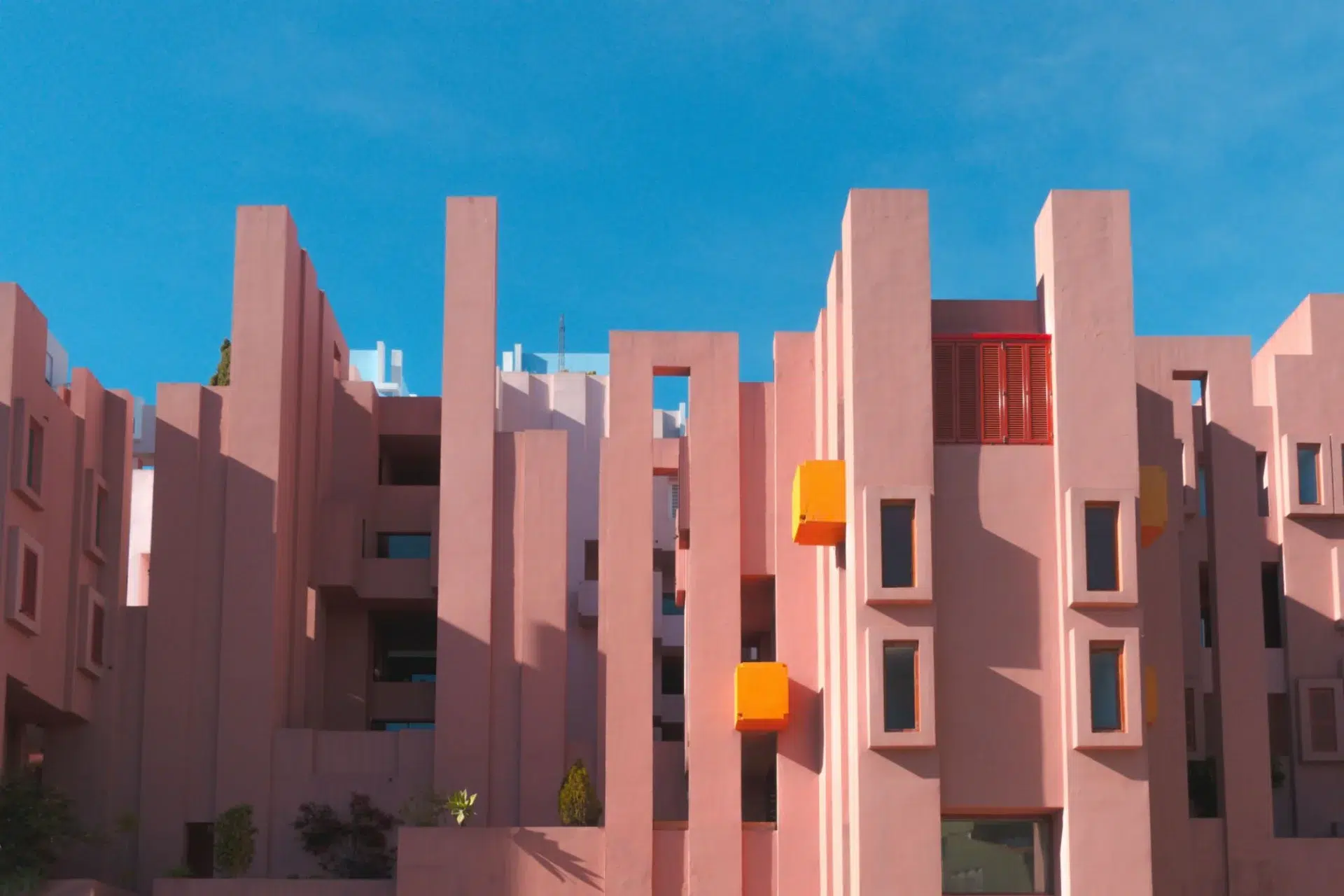
- Housing Innovation: Spain has produced particularly innovative housing projects, from Ricardo Bofill’s “Walden 7” to recent social housing developments addressing environmental and social concerns.
Projects like the Metropol Parasol in Seville (by Jürgen Mayer H.) demonstrate how contemporary Spanish architecture engages with historical contexts while introducing bold new forms that revitalize urban spaces and create architectural landmarks that respect regional identities.

Environmental Adaptations: Climate and Landscape
Spanish regional architecture demonstrates sophisticated environmental adaptations developed over centuries of practical experience with diverse climatic conditions.
Key Characteristics
- Mediterranean Adaptations: Narrow streets, thick walls, small windows, courtyards, and reflective white surfaces in southern regions minimize solar gain during hot summers.
- Atlantic Responses: In rainy northern regions, steeply pitched roofs, elevated granaries, and enclosed balconies manage persistent precipitation while capturing available sunlight.
- Continental Solutions: Central Spain’s extreme temperature variations produced massive walls for thermal mass, semi-underground spaces, and careful orientation to manage seasonal extremes.
- Mountain Architecture: The Pyrenees and other mountain ranges developed distinctive stone structures with snow-shedding roofs and compact forms to conserve heat.
- Contemporary Integration: Modern Spanish architects often incorporate traditional environmental wisdom into innovative designs, as seen in projects like the energy-efficient headquarters of Castilla y León’s Environmental Department by Pich Architects.
Traditional Spanish architecture offers valuable lessons for contemporary sustainable design, demonstrating passive cooling and heating techniques, material efficiency, and contextual responses that preceded modern sustainability discourse but align with its fundamental principles.

Conclusion: Unity in Diversity
Spain’s architectural diversity represents one of Europe’s most varied and sophisticated design traditions, with each region developing distinctive responses to local conditions while participating in broader Mediterranean, European, and global architectural conversations.
This diversity reflects Spain’s complex history and geography, with each invasion, economic shift, and cultural movement leaving architectural traces still visible today. The resulting built environment offers not just aesthetic pleasure but valuable lessons about cultural identity, environmental adaptation, and the evolution of design traditions.
What unites these varied expressions is a consistent engagement with place—whether through materials, climate response, cultural symbolism, or functional adaptation. Even at their most innovative, Spanish architects typically maintain connections to local building cultures while reinterpreting them for contemporary needs.
As Spain continues to evolve in response to global challenges of climate change, economic transformation, and cultural exchange, its architectural heritage provides both inspiration and practical wisdom. The dialogue between regional expression and universal principles that has characterized Spanish architecture for centuries continues today, producing buildings and spaces that remain distinctively Spanish while engaging with global architectural discourse.
Bibliography and Further Reading
- Barrucand, Marianne, and Achim Bednorz. Moorish Architecture in Andalusia. Taschen, 2007.
- Bevan, Bernard. History of Spanish Architecture. Charles Scribner’s Sons, 1938.
- Cabrera, Juan Rafael. Architecture of the Canary Islands. Editorial Rueda, 2001.
- Freixa, Jaume. Josep Lluís Sert. Editorial Gustavo Gili, 1992.
- García Mercadal, Fernando. La casa popular en España. Espasa-Calpe, 1930.
- Howard, Jeremy. Art Nouveau: International and National Styles in Europe. Manchester University Press, 1996.
- Kubler, George, and Martin Soria. Art and Architecture in Spain and Portugal and Their American Dominions, 1500-1800. Penguin Books, 1959.
- Lampugnani, Vittorio Magnago. Santiago Calatrava: Structures and Projects. Gustavo Gili, 1990.
- Moneo, Rafael. Theoretical Anxiety and Design Strategies in the Work of Eight Contemporary Architects. MIT Press, 2004.
- Sola-Morales, Ignasi de. Contemporary Spanish Architecture: An Eclectic Panorama. Rizzoli, 1986.
- Tzonis, Alexander. Santiago Calatrava: The Complete Works. Rizzoli, 2007.
- Zabalbeascoa, Anatxu. Igualada Cemetery: Enric Miralles and Carme Pinós. Phaidon Press, 1996.
Spanish architectural diversity is a testament to its history, culture, and adaptation to the environment. Each region offers a unique perspective on the evolution of design, blending tradition and innovation in its structures.
If you are passionate about architecture and want to explore more about styles, influences, and iconic projects, follow our blog and discover how design continues to transform spaces in Spain and around the world.