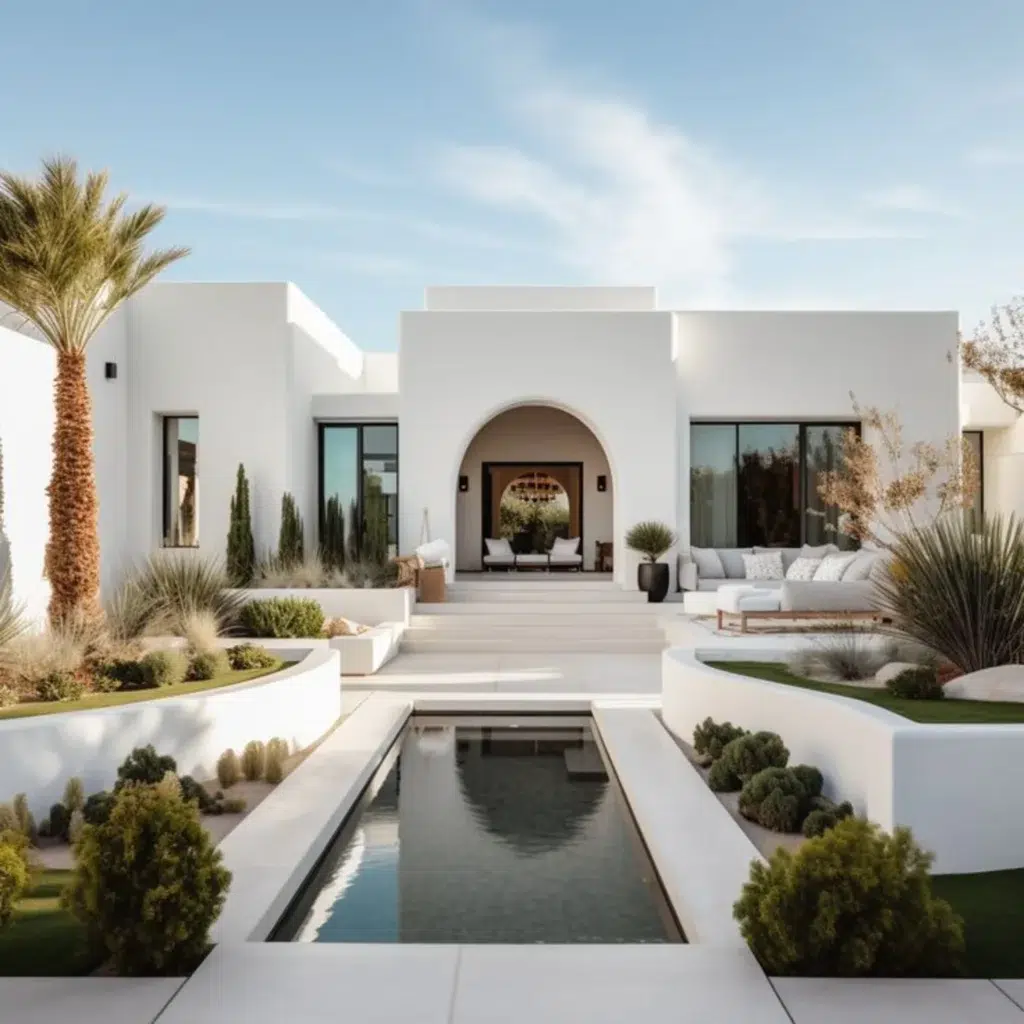
The Costa Blanca of Alicante and the Region of Murcia have become an architectural laboratory where Mediterranean tradition merges with the most avant-garde currents of contemporary design. This evolution has given rise to a sophisticated reinterpretation of the iconic Mediterranean whitewashed houses, transforming them into minimalist spaces that maximise natural light and maintain the interior freshness characteristic of traditional construction, but with a completely renewed architectural language.
Mediterranean Heritage: Roots of a Constructive Tradition
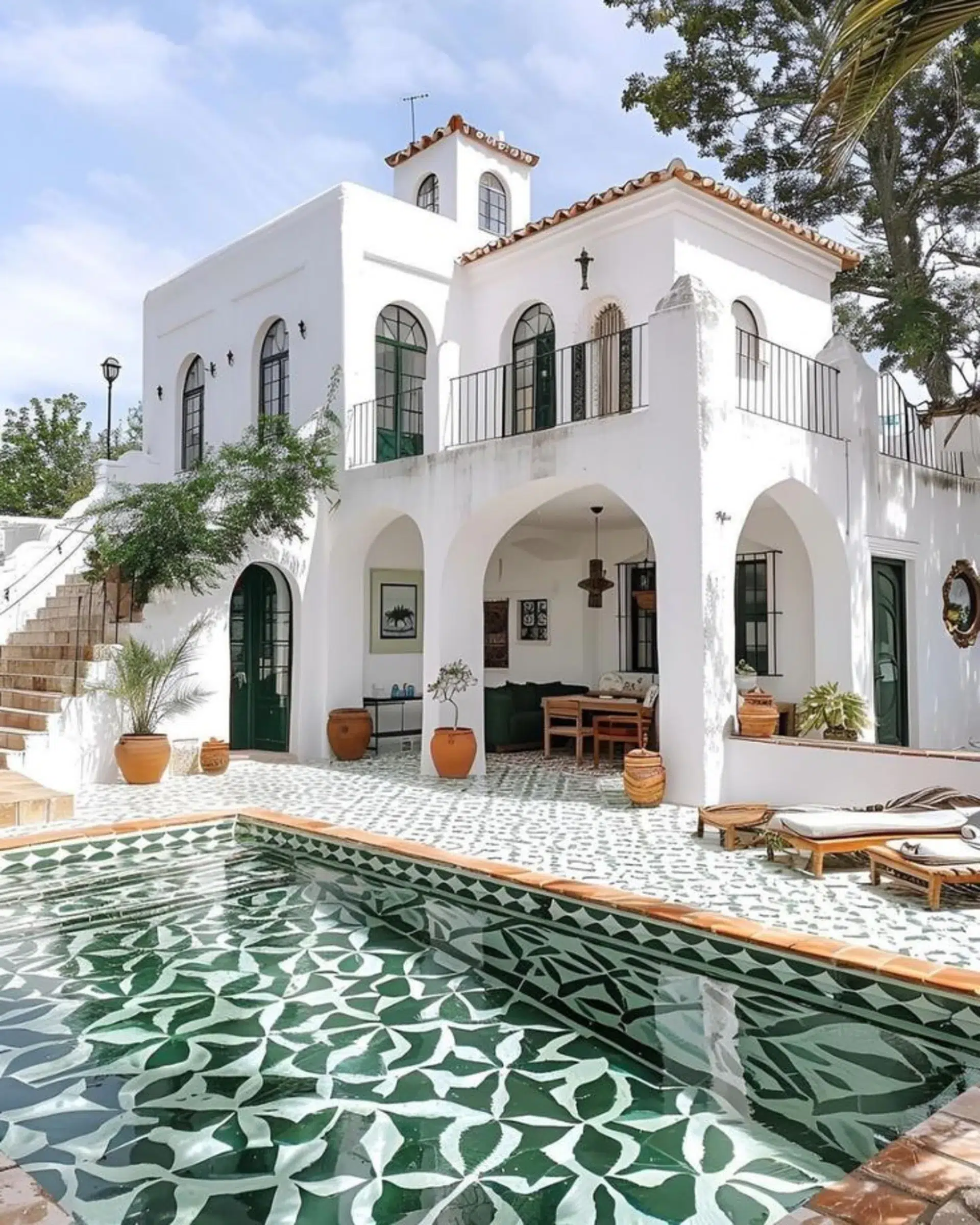
To understand contemporary white architecture in these provinces, we must begin with its historical foundations. Traditional construction techniques in Murcia and Alicante have their roots in a millennial heritage dating back to the Andalusian period, between the 10th and 13th centuries. During this period, fundamental principles were established that still influence regional architecture today: the use of lime as a binding material, masonry with local limestone, and the constant pursuit of interior coolness through passive solutions.
Lime, that material which provides the characteristic Mediterranean white, was not merely an aesthetic choice. Its use responded to specific climatic needs: the capacity to reflect heat, natural antibacterial properties, and the permeability that allows wall transpiration. This ancestral constructive wisdom has been recovered and reinterpreted by contemporary architects, who combine it with modern technologies to create spaces that dialogue intelligently with their environment.
Characteristics of the New Mediterranean White Architecture
Functional Minimalism and Open Spaces
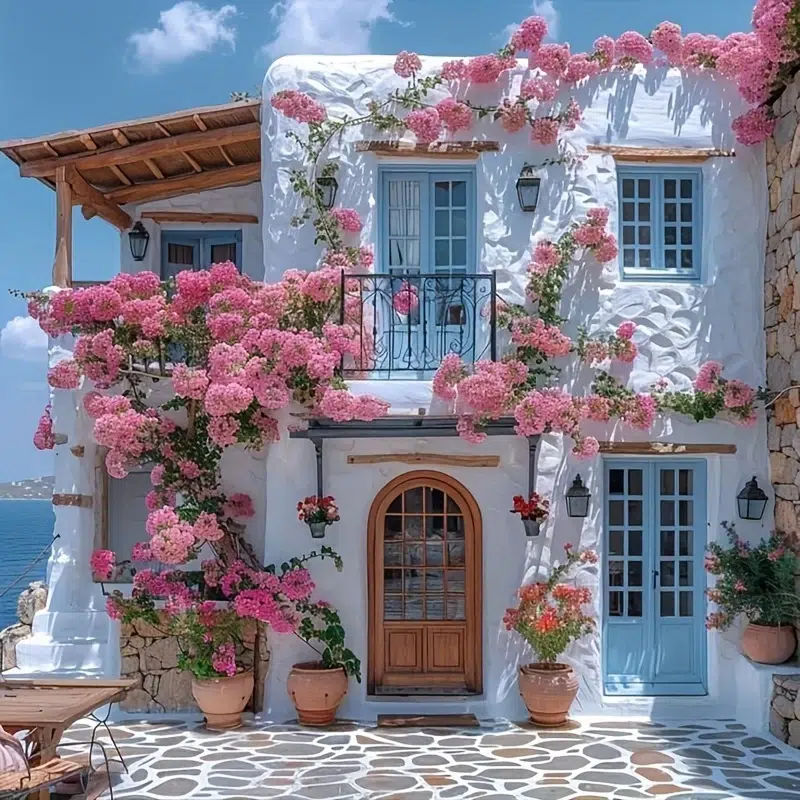
Contemporary white architecture in Alicante and Murcia is characterised by clean lines and pure geometric volumes that eliminate all superfluous decorative elements. Interior spaces are conceived as continuous flows where traditional divisions between rooms dissolve, creating diaphanous environments that favour air circulation and natural light entry.
Local architecture studios, such as Pablo Muñoz Payá Arquitectos in Alicante or Singular Studio in Jávea, have developed projects that exemplify this philosophy. Singular Studio, internationally recognised with the Cemex Building Award 2017 for “best international dwelling in the residential category”, has been published in specialised media and examined at the International Congress of White Architecture (CIAB), consolidating the region as a reference in this architectural style.
Interior-Exterior Integration
One of the fundamental keys of contemporary Mediterranean design is the elimination of rigid boundaries between interior and exterior. Large glass windows, terraces that extend like additional rooms, and interior courtyards that act as lungs of light create spatial continuity that maximises the experience of the Mediterranean climate.
This integration is not accidental, but an intelligent response to the benign climate of the region. With more than 300 days of sunshine per year on the Costa Blanca, architects take advantage of these exceptional conditions to create hybrid spaces where life naturally extends outdoors.
Construction Techniques: Tradition and Avant-garde
Contemporary Materials with Mediterranean Soul
Contemporary construction in Alicante and Murcia has evolved significantly from traditional techniques of limestone masonry and lime mortars. However, fundamental principles remain: the pursuit of thermal efficiency, the use of local materials, and adaptation to the Mediterranean climate.
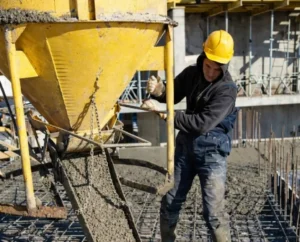
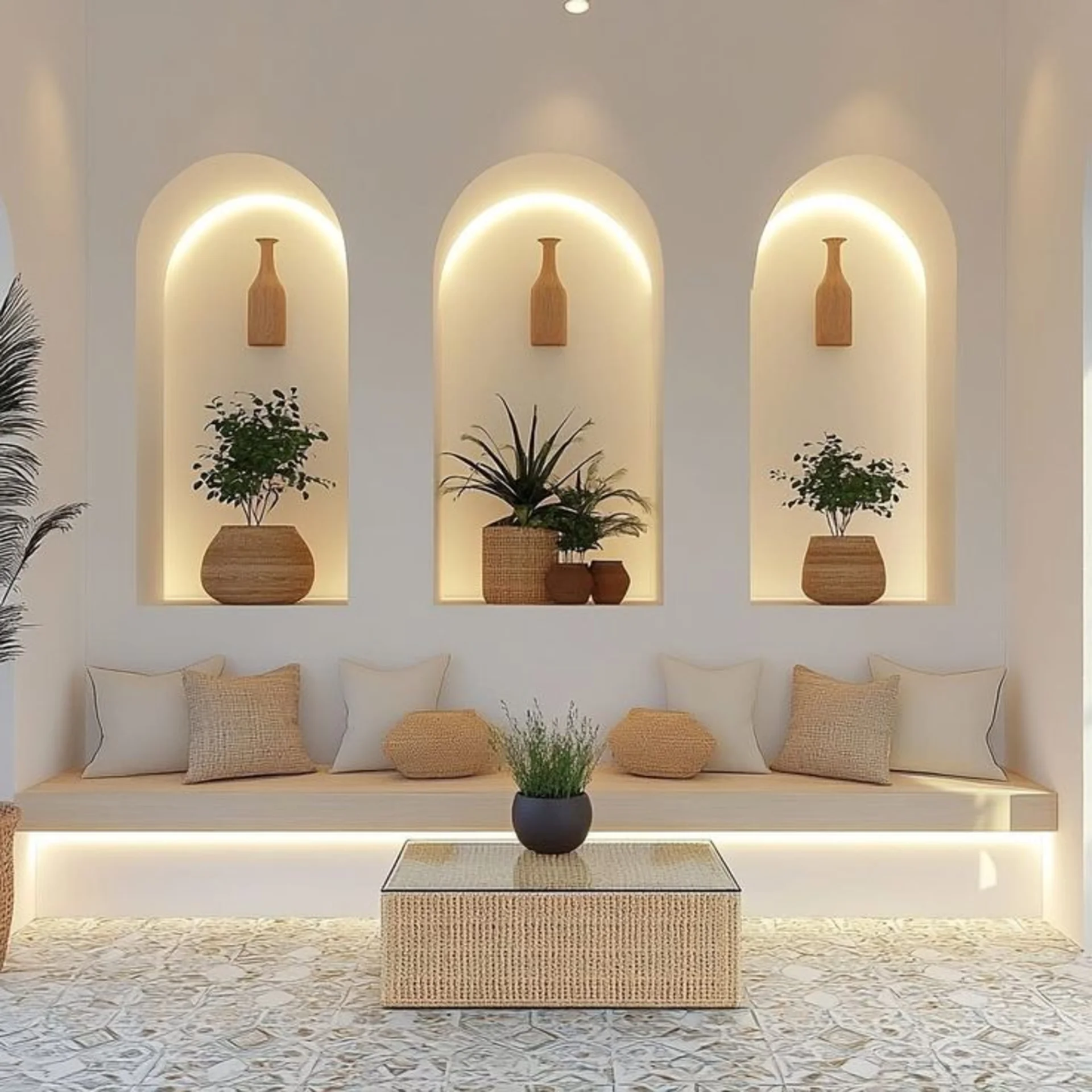
New projects integrate materials such as exposed concrete treated with textures that evoke traditional stone, aluminium panels with finishes that imitate lime rendering, and ventilated façade systems that optimise the thermal behaviour of the building. The architecture studio Nagoa in Alicante has developed projects that fuse “tradition and avant-garde, incorporating the latest trends and technologies without losing sight of the rich architectural heritage of the Mediterranean region”.
Sustainable Construction Systems
Sustainability has become a fundamental pillar of contemporary architecture in both provinces. Specialised studios, such as Nuño Arquitectura, which operates in Alicante and Murcia, have adopted Passivhaus standard principles, achieving constructions with great airtightness, excellent thermal comfort, and significant energy savings.
These systems include:
- Continuous thermal insulation that eliminates thermal bridges
- High-performance windows with triple glazing
- Controlled mechanical ventilation systems with heat recovery
- Strategic orientation to take advantage of solar gains in winter and protect against summer overheating

The Bioclimatic Design Revolution
Adaptation to the Mediterranean Climate
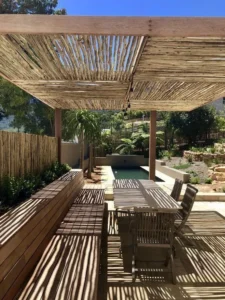
The Mediterranean climate of Alicante and Murcia, characterised by hot summers and mild winters, has led architects to develop specific bioclimatic design strategies. Cross-ventilation has become an essential technique that maximises fresh air flow and reduces dependence on air conditioning. Pergolas and shading systems on terraces and courtyards offer effective solar protection.
Water Management in Architecture
Although Alicante and Murcia have a predominantly dry climate, torrential rains in spring and autumn require robust drainage systems. Contemporary projects incorporate innovative solutions such as flat roofs with sustainable drainage systems, rain gardens, and permeable surfaces that manage water intelligently.
Outstanding Examples in the Territory
Costa Blanca: Laboratory of Innovation
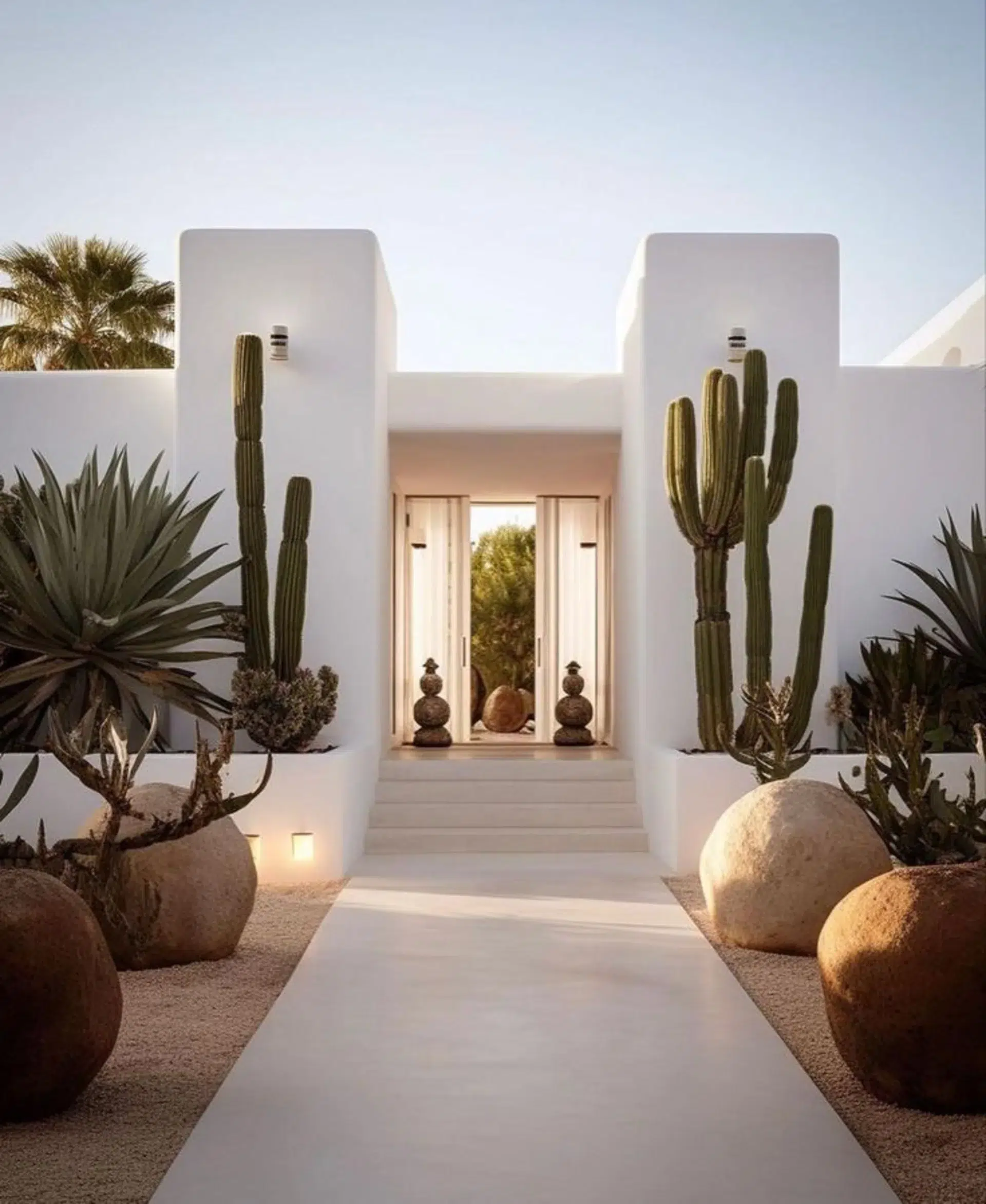
The Costa Blanca has positioned itself as the epicentre of contemporary luxury architecture. In localities such as Jávea, Moraira, Altea Hills, and the vicinity of San Juan beach, architects of national and international renown develop avant-garde projects. These properties take advantage of the benefits of the terrain, temperature, and natural light to provide architectural experiences that redefine the concept of Mediterranean habitat.
Studio Code, based in Benidorm, has developed projects that exemplify this philosophy, such as the renovation of a 1960s dwelling in Alfàs del Pi, transforming it into a space of minimalist and modern Mediterranean style. The project prioritised the creation of open and diaphanous spaces with maximum natural light, using natural materials such as stone, lime mortar, and wood.
Murcia: Innovation in the Interior
In the Region of Murcia, studios such as Ecoproyecta have developed emblematic projects that combine sustainability and contemporary design. Among their achievements are bioclimatic dwellings in Santiago de la Ribera and energy efficiency projects that have obtained recognition in international competitions such as Kömmerling near-zero energy consumption building.
The San Mateo Residential project in Lorca, developed by MCEA Arquitectura and NAOS 04 Arquitectos after the 2011 earthquake, became a reconstruction model that combines seismic safety with contemporary architecture, using concrete prefabs and advanced construction systems.
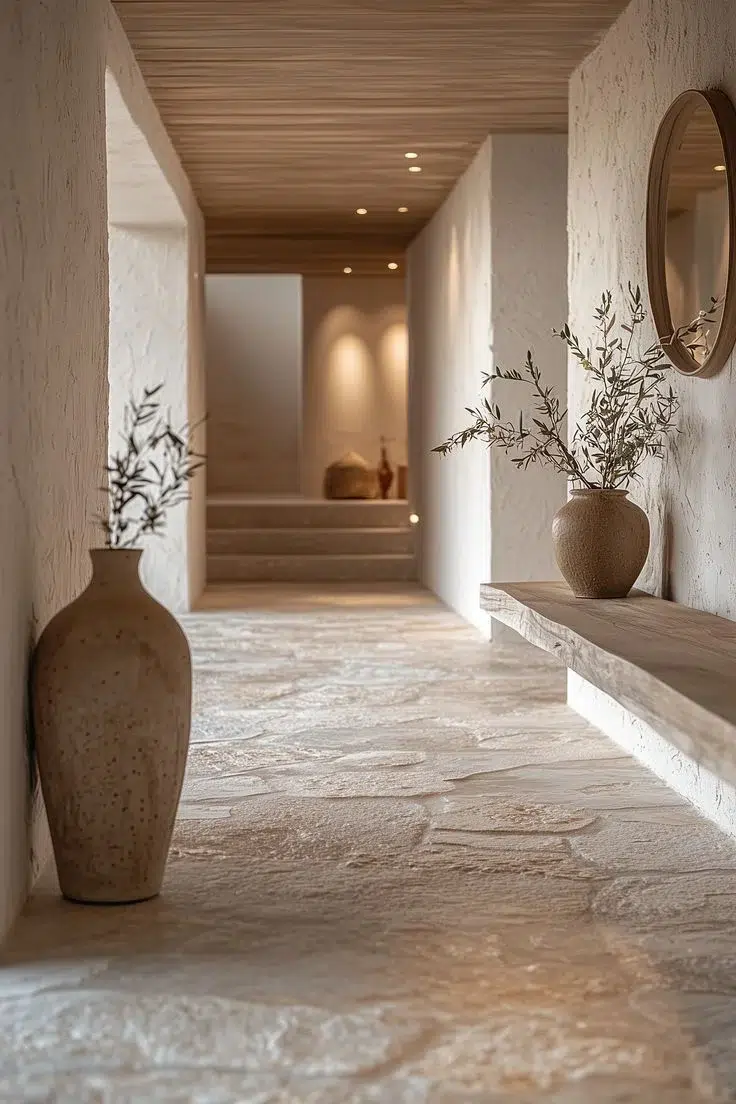
Regulations and Legislation: Contemporary Legal Framework
Building Codes and Sustainability
Current legislation in both provinces has evolved to incorporate sustainability and energy efficiency criteria. The Technical Building Code (CTE-DB-HE) in its latest update establishes requirements that place Spanish constructions close to international standards such as BREEAM, LEED, or VERDE, without requiring disproportionate investments.
Local and Landscape Regulations
The municipalities of the Costa Blanca and Murcia have developed specific regulations that seek to preserve Mediterranean character whilst allowing architectural innovation. These regulations include height limitations, land occupation percentages, and landscape integration criteria that guarantee harmony between new constructions and the natural environment.
Materials and Contemporary Chromatic Palettes
Evolution of Mediterranean White
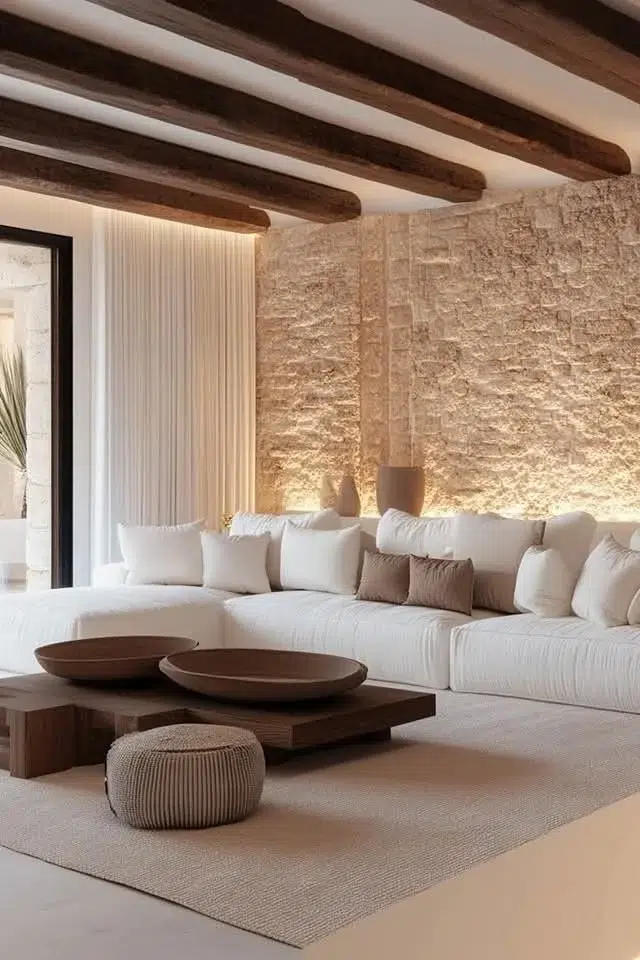
The traditional white of Mediterranean houses has evolved towards more sophisticated palettes that include broken whites, sands, ochres, stone tones, and soft terracottas. This chromatic expansion responds to both aesthetic and functional criteria, allowing better integration with the Mediterranean landscape.
Contemporary materials include:
- Mineral mortars with textured finishes that evoke traditional rendering
- Local natural stone such as travertine and limestone
- Treated exterior woods that provide warmth and contrasts
- Metal elements with anti-corrosive treatments specific to marine environments
Technology and Home Automation
The integration of home automation systems has become standard in contemporary dwellings in the region. These systems allow automated control of air conditioning, lighting, irrigation, and security, optimising comfort and energy efficiency. Intelligent management of blinds and solar protection elements automatically adapts to climatic conditions, maximising the use of natural light whilst controlling thermal gain.
Future Trends and Perspectives
Collaborative Construction and Cooperatives
Trends for 2024 in Murcia include the development of housing cooperatives, a model that allows citizens to actively participate in the design, construction, and management of their homes. This model promotes collective ownership and facilitates the creation of communities committed to sustainability.
Biophilic Design
Biophilic design is emerging as a trend that seeks connection between people and nature through the incorporation of natural elements in interior and exterior spaces. This approach has demonstrated benefits for health and wellbeing, reducing stress and improving concentration.
Innovative Materials
Research into new sustainable materials continues to evolve. The most promising materials include bamboo as a sustainable alternative, high thermal efficiency technical ceramics, and recycled materials that reduce environmental impact without compromising technical performance.
Conclusion: A Sustainable and Elegant Future
Contemporary white architecture in Alicante and Murcia represents much more than an aesthetic evolution of Mediterranean tradition. It is an intelligent and sustainable response to 21st-century challenges, combining ancestral constructive wisdom with the most advanced technologies to create spaces that respect the environment, optimise resources, and improve the quality of life of their inhabitants.
This architecture does not deny its roots, but reinterprets them in a contemporary manner, creating cultural continuity that projects towards the future. Professionals from both provinces have demonstrated that it is possible to create avant-garde architecture without losing Mediterranean essence, establishing a model that can serve as a reference for other regions with similar climatic characteristics.
The commitment to sustainability, landscape integration, and spatial quality positions Alicante and Murcia as references in contemporary Mediterranean architecture, where each project contributes to writing a new chapter of this millennial constructive tradition, adapted to the needs and sensibilities of the present.
Are you considering building or renovating your home with a contemporary white architecture approach inspired by the Mediterranean? At Pacheco Architects, we design timeless, sustainable spaces that blend innovation and tradition across Alicante, Murcia and the Costa Blanca. Contact us to start shaping your future home with character and light.